NinjaOne RMM: Why Intune Is Not Always Enough
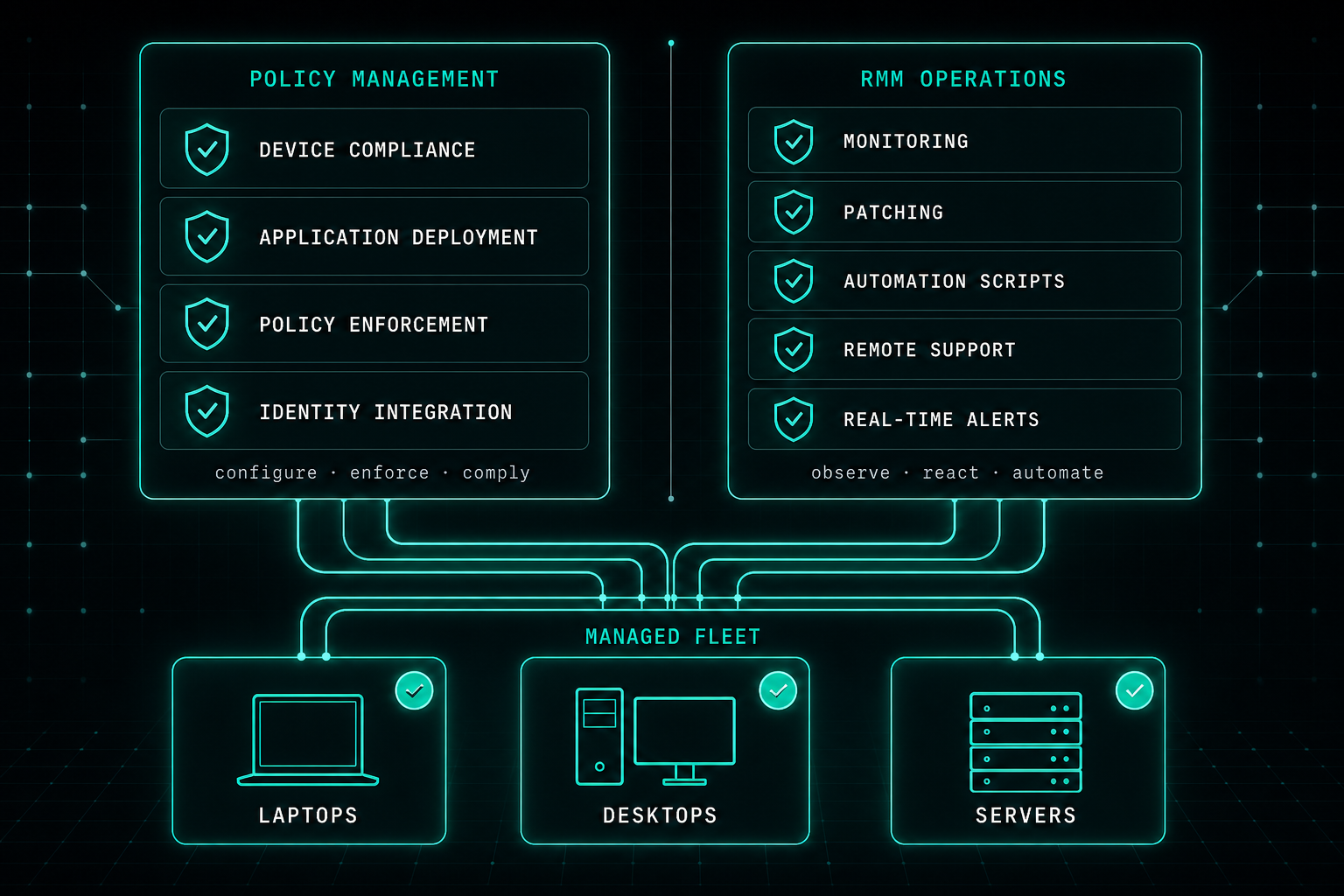
Intune is a strong platform for policy and device compliance. It does not always cover the day-to-day operational reality. RMM platforms like NinjaOne add monitoring, automation, patching, and remote support so IT teams stay ahead of incidents instead of behind tickets.
Many organizations believe that Microsoft Intune is the complete answer for endpoint management.
Intune is a strong platform, especially for policy management, device compliance, application deployment, and Microsoft ecosystem integration. But it is not always enough for day-to-day IT operations.
This is where RMM becomes important.
An RMM platform gives IT teams better visibility into endpoints, servers, patch status, alerts, remote access, scripts, automation, and real-time operational issues. It helps the team understand what is happening now, not only whether a device matches a policy.
NinjaOne RMM is a good example of this approach.
For IT teams, the value is not only managing devices. It is being able to react quickly, fix issues remotely, automate repeated tasks, monitor health, deploy patches, and support users without waiting for them to open a ticket.
Intune can manage many things, but it is not a full replacement for an operational RMM.
A company still needs:
- Visibility into what is actually happening on endpoints and servers.
- Monitoring of health, performance, and alerts in real time.
- Automation for repeated operational tasks.
- Remote troubleshooting that does not wait for a ticket.
- Fast, hands-on support for endpoints and servers.
The real question is not Intune or RMM.
The right approach is to understand what each platform does best.
Intune is strong for device management and policy.
RMM is strong for operations, monitoring, support, and automation.
For modern IT teams, using both in the right way can create a much better endpoint management model.
Proxmox: When Cost Forces a Real Infrastructure Decision
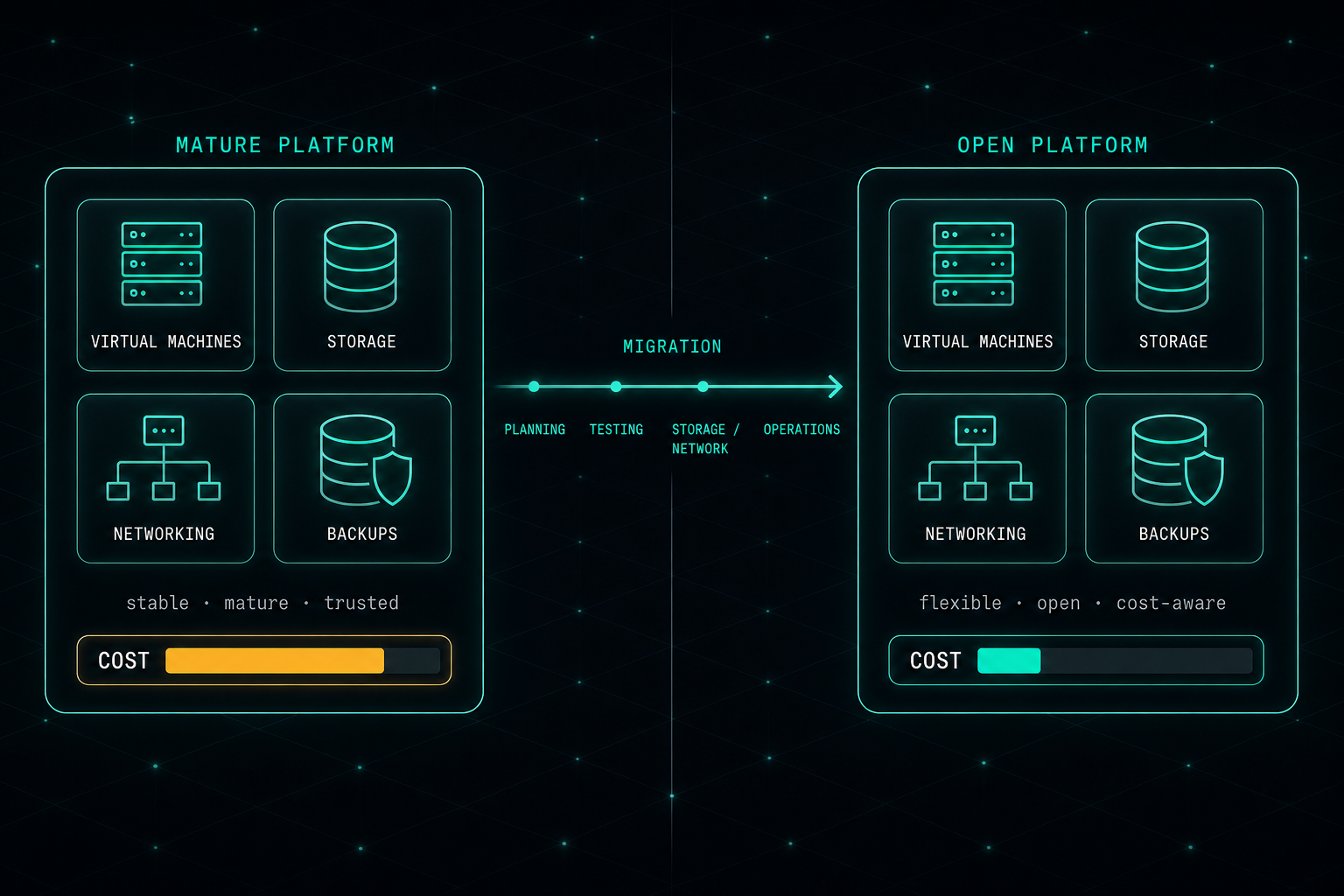
VMware is still an excellent, mature platform. But the price has changed the conversation. For many organizations, moving to Proxmox is no longer about replacing something bad with something better. It is about making infrastructure decisions that also make financial sense.
Read article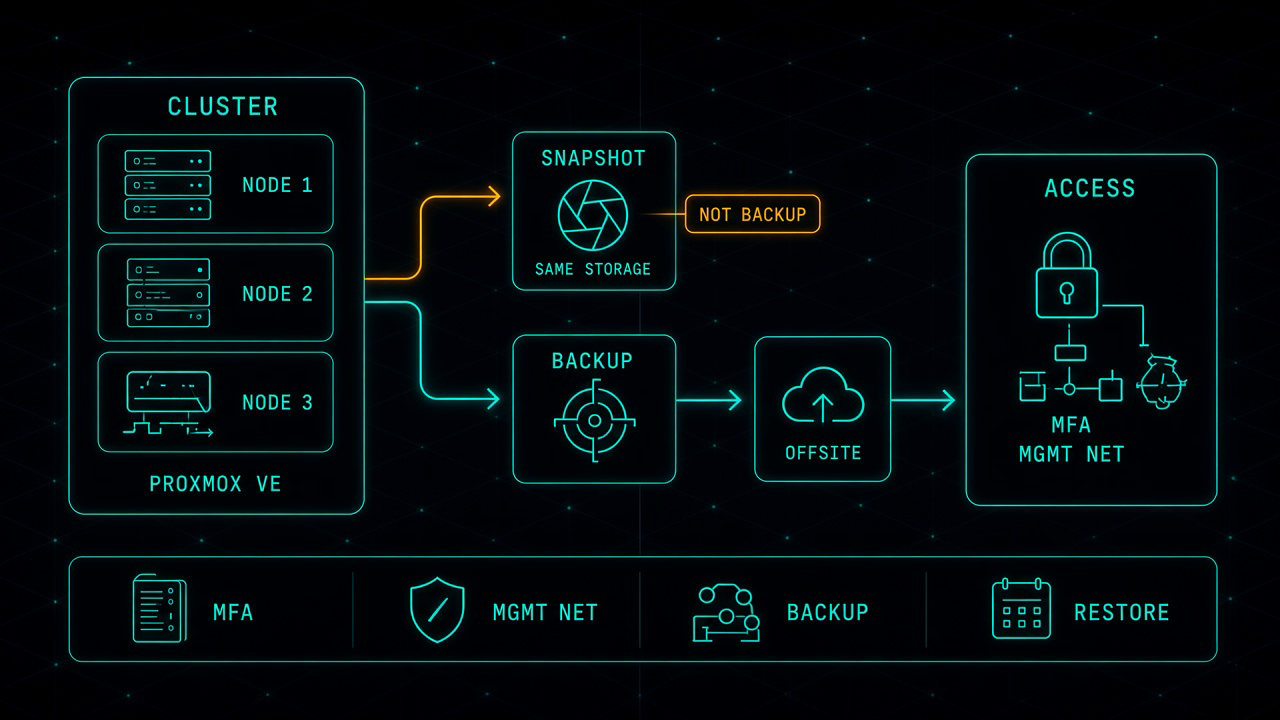
Proxmox in Production: The Work That Starts After the Move
Leaving VMware for Proxmox can be the right financial decision. It is not the finish line. After the last virtual machine lands, you own the hypervisor, the cluster, the backup, and the access path. That is where most of the real work starts.
Read article