
Why You Should Delete the Default AWS VPC
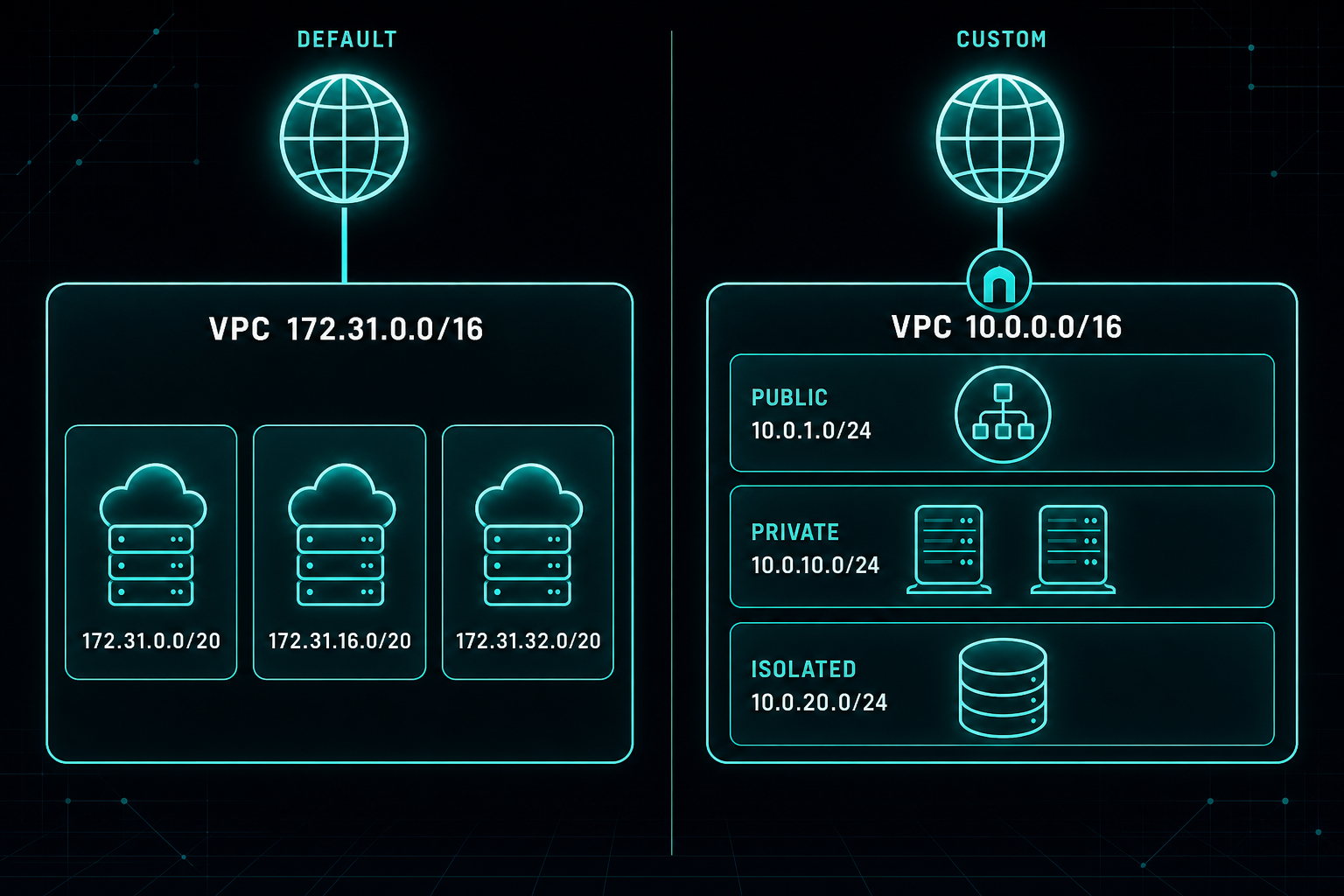
The default AWS VPC is fine for kicking the tires. For a real company environment, it is too open, too generic, and too easy to misuse.
The default AWS VPC is good for quick testing, but it is not a good foundation for a company environment.
By default, AWS creates a VPC with 172.31.0.0/16, public subnets in each Availability Zone, an Internet Gateway, and a route to the internet. The default subnets are usually /20, which means thousands of IP addresses per subnet.
This is too open and too generic for production.
A company should build its own VPC with a clear network design. Public subnets should be used only for resources that really need public access, such as load balancers. Application servers should be placed in private subnets, and databases should be placed in isolated subnets.
Subnets should also be sized correctly. Creating very large subnets creates unnecessary noise, wastes IP space, and makes the environment harder to manage.
Deleting the default VPC helps reduce mistakes, prevents accidental public exposure, and forces a cleaner cloud network design that matches the company’s real security and operational needs.
Proxmox in Production: The Work That Starts After the Move
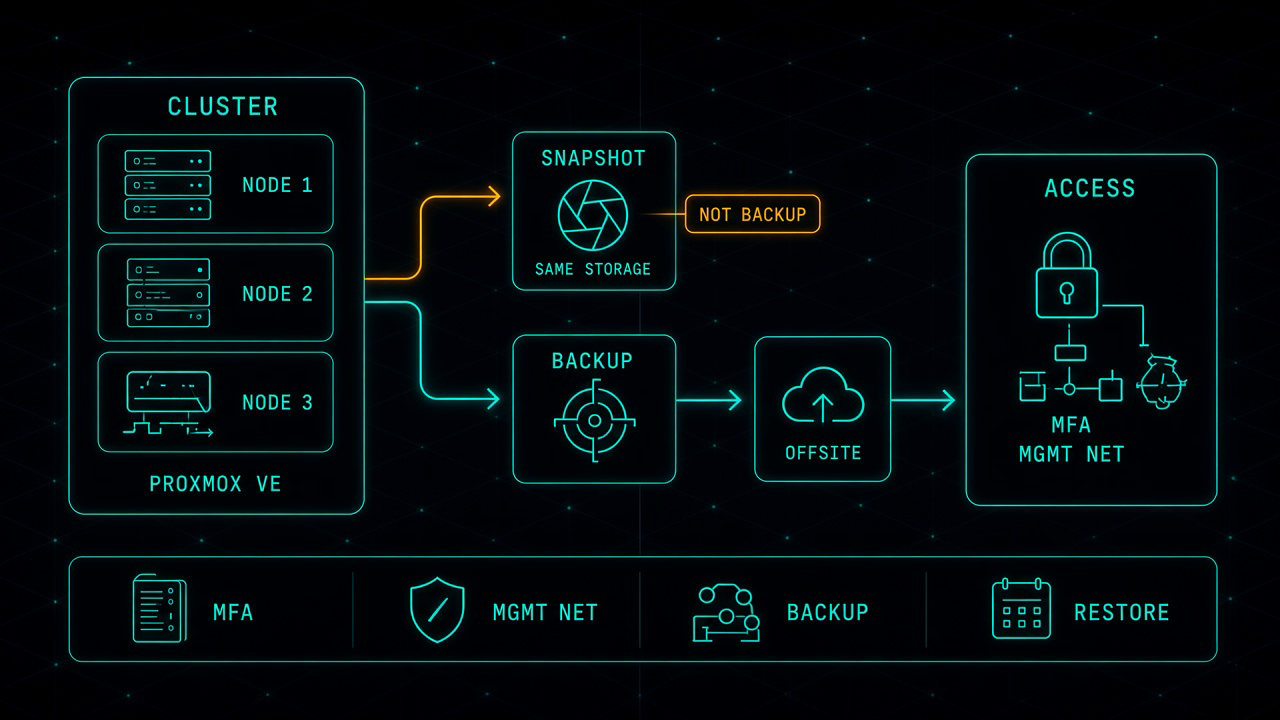
Leaving VMware for Proxmox can be the right financial decision. It is not the finish line. After the last virtual machine lands, you own the hypervisor, the cluster, the backup, and the access path. That is where most of the real work starts.
Read article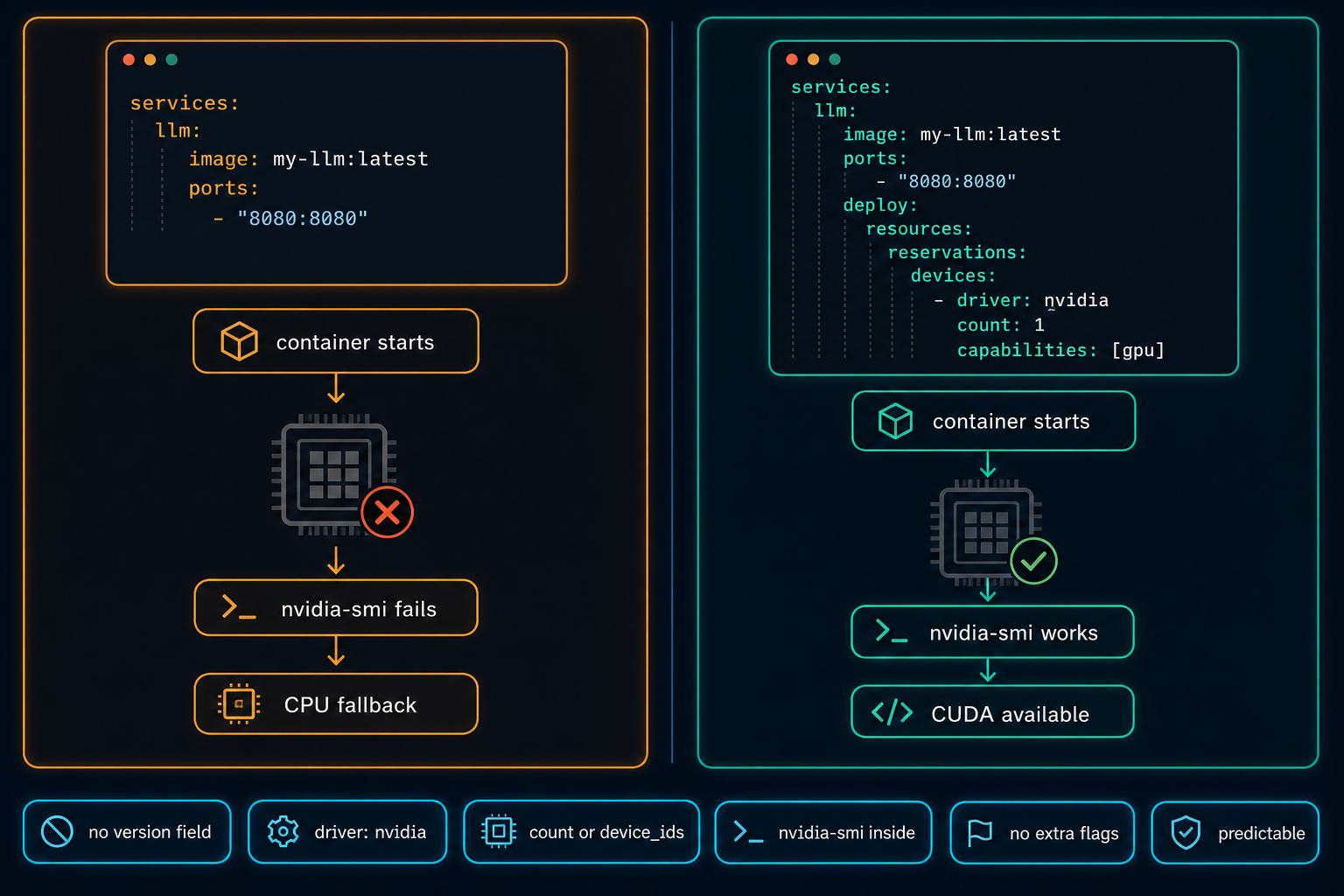
Docker Compose Does Not Automatically Use the GPU
On Linux GPU servers, Docker Compose does not use the NVIDIA GPU automatically. The service starts, nothing obviously fails, and the workload quietly falls back to CPU. The fix is a few lines in the compose file, but only if you know to look for them.
Read article