
AI Agents: More Than Just a Chat
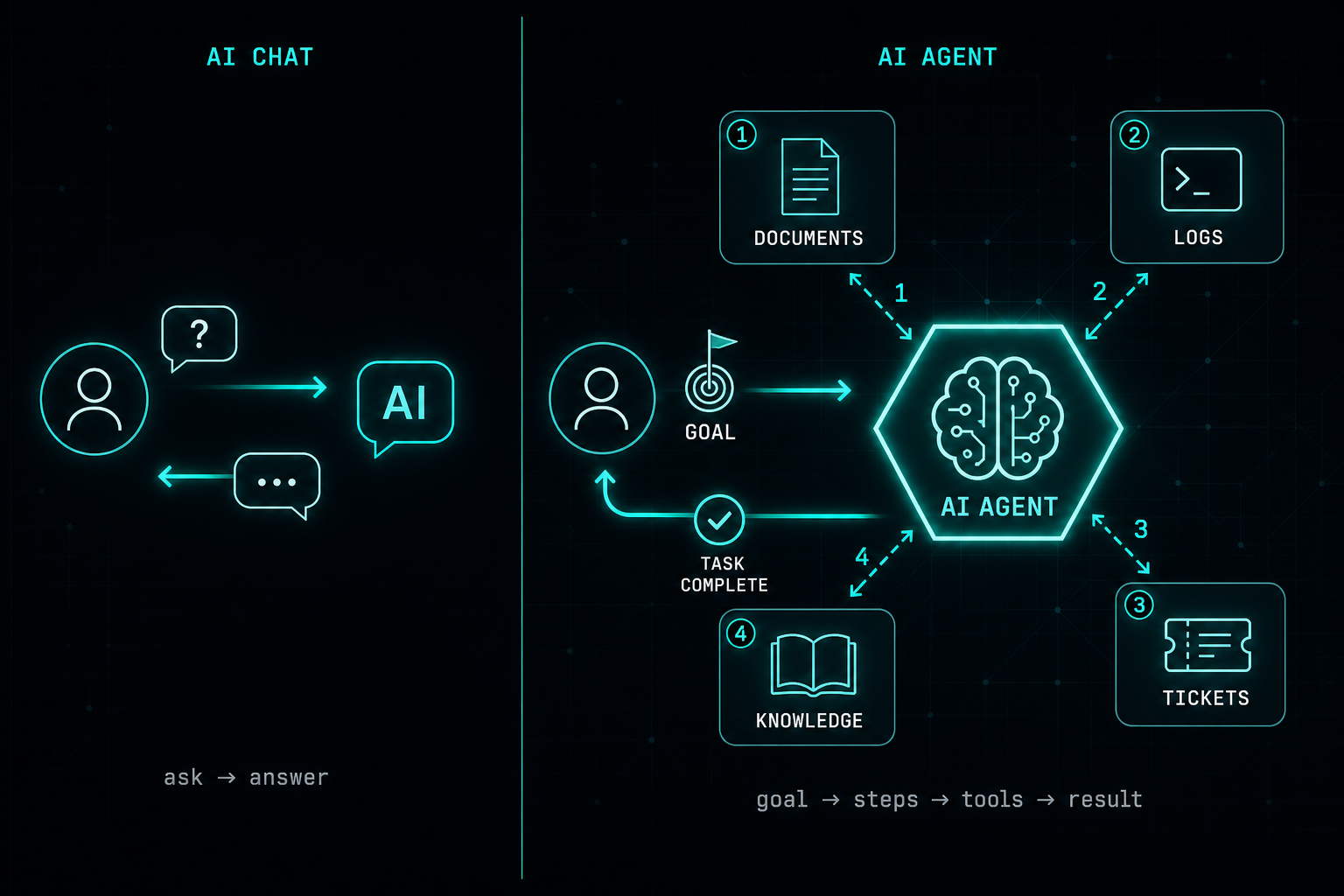
AI chat is where many companies start. AI agents are where AI becomes part of real work, reading documents, checking logs, searching tickets, and helping teams complete tasks instead of just talking about them.
Most people already know how to use AI chat.
You ask a question, and the AI answers. You ask for a summary, text, code, or an explanation, and it responds.
This is useful, but it is still mostly a conversation.
An AI agent is different.
An agent is designed to understand a goal, break it into steps, use the right tools, check information, and help complete a task from start to finish.
A regular chat can explain what should be done.
An agent can help do it.
For example, instead of only explaining how to review a document, an agent can read the document, find missing details, compare it with company rules, and suggest the next action.
Instead of only answering a support question, an agent can check logs, search tickets, look at internal knowledge, and recommend a fix based on real context.
This is why AI agents are becoming important for IT, security, operations, and business teams.
They can reduce manual work, connect information from different systems, and help teams move faster without jumping between tools all day.
AI chat is where many companies start.
AI agents are where AI becomes part of real work.
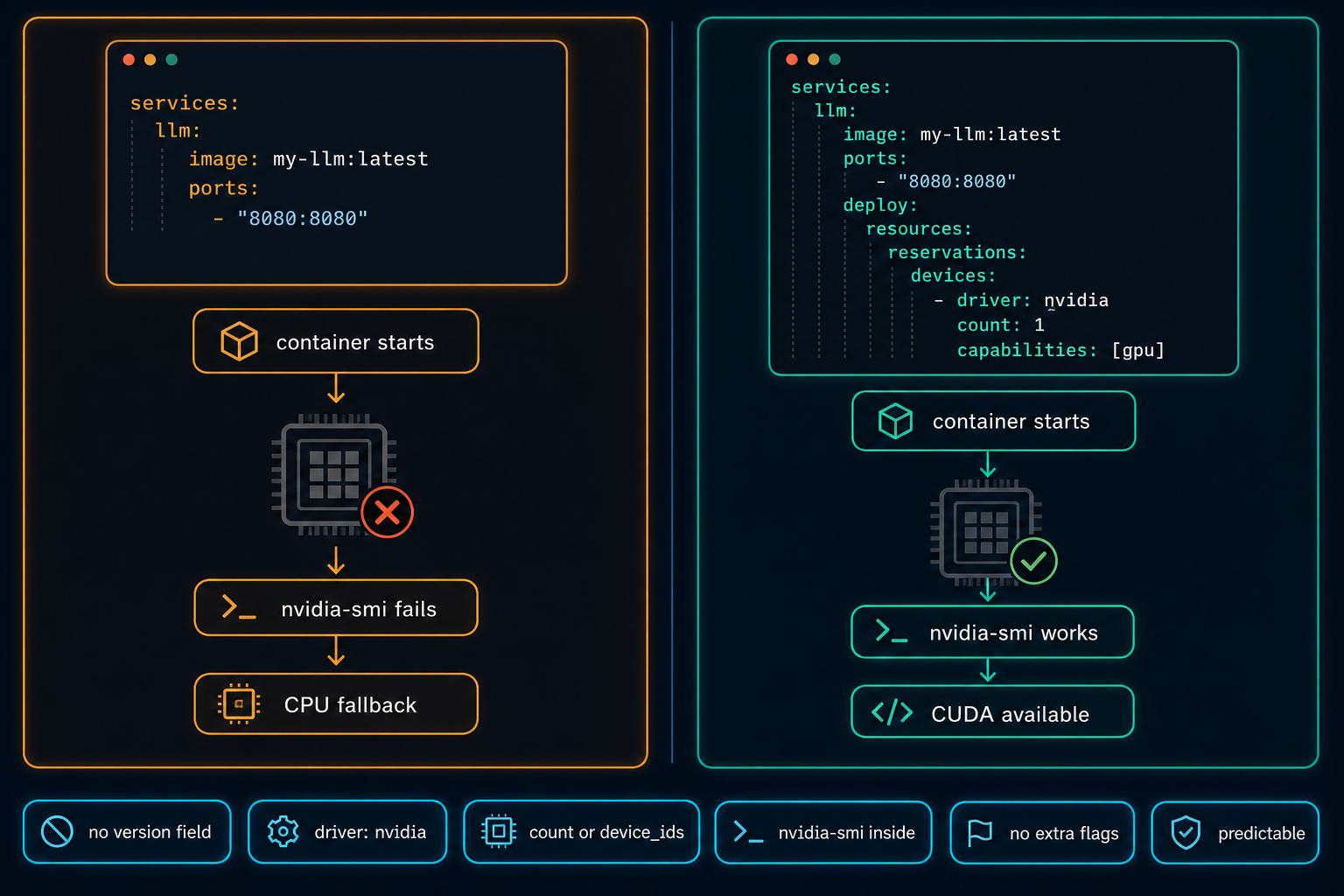
Docker Compose Does Not Automatically Use the GPU
On Linux GPU servers, Docker Compose does not use the NVIDIA GPU automatically. The service starts, nothing obviously fails, and the workload quietly falls back to CPU. The fix is a few lines in the compose file, but only if you know to look for them.
Read article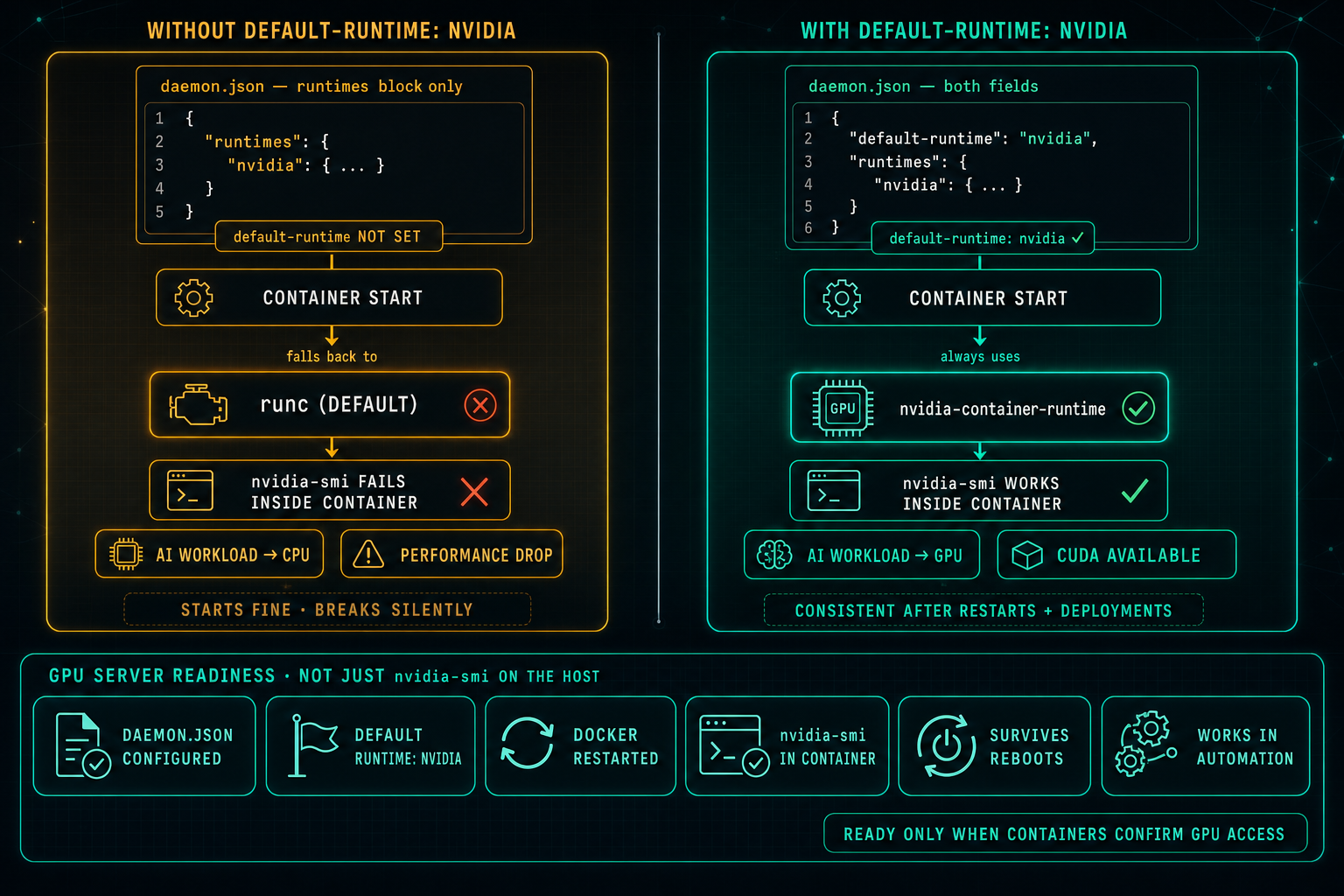
Docker Default Runtime: Keep GPU Containers on NVIDIA
On Linux GPU servers, Docker can know about the NVIDIA runtime and still not use it. If default-runtime is missing from daemon.json, every container falls back to runc, nvidia-smi fails inside the container, AI workloads drop to CPU, and the problem looks like an application issue when it is really a one-line configuration gap.
Read article