
Network Segmentation: Do Not Put Everything on the Same VLAN
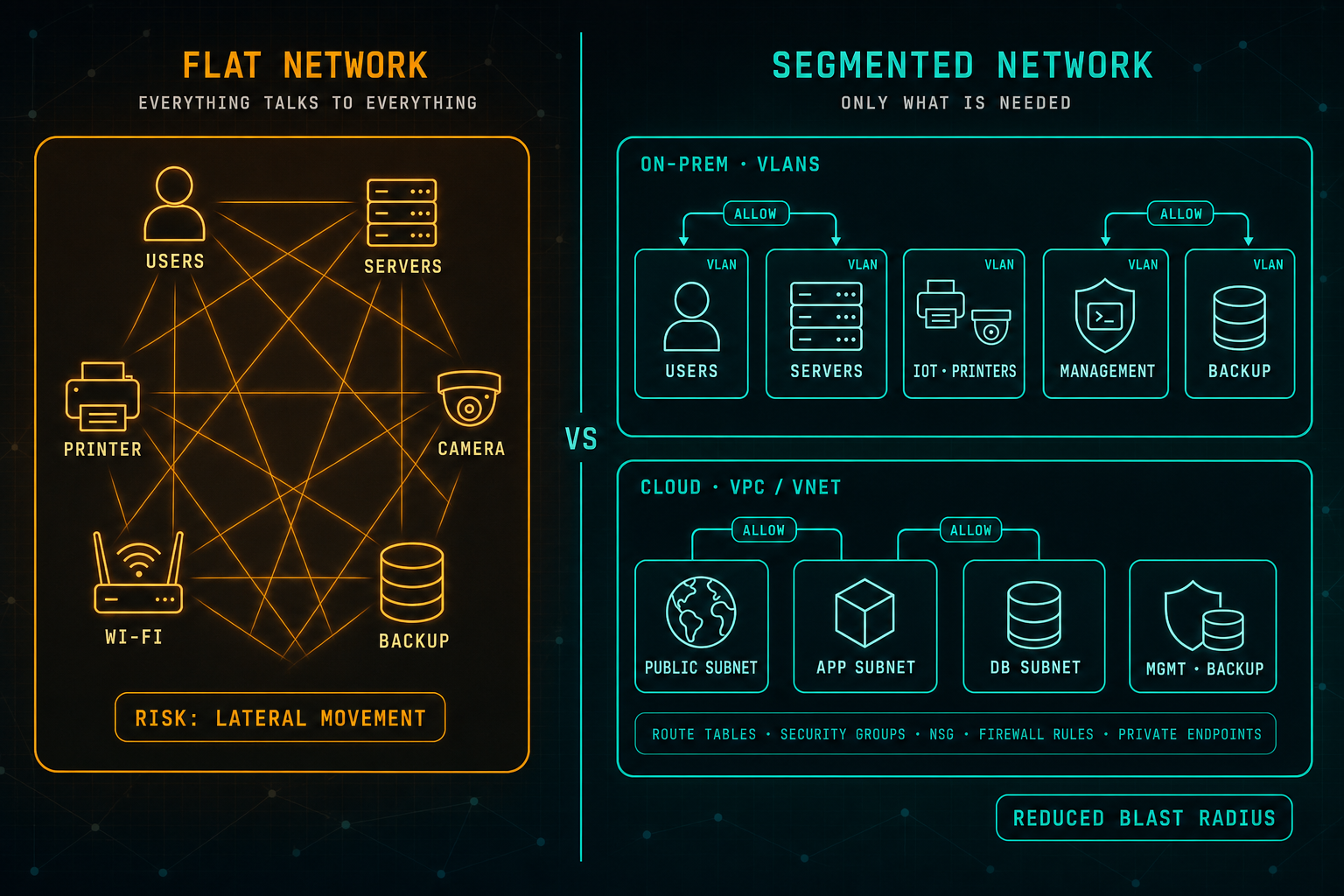
Network segmentation is one of the most basic security principles, and one of the most ignored. Flat networks are easy to build but easy to abuse, one compromised endpoint can reach far too much. Whether it is VLANs on-prem or subnets, security groups, and private endpoints in the cloud, every system should only talk to what it really needs.
Network segmentation is one of the most basic security principles, but many environments still ignore it.
In on-prem environments, this usually means everything sits too close together. Users, servers, printers, cameras, Wi-Fi, management interfaces, and backup systems may all have too much access to each other.
It works until something goes wrong.
If one endpoint is infected or one user account is compromised, a flat network makes it much easier for an attacker to move laterally across the organization.
Segmentation reduces that risk.
- Users should not have direct access to every server.
- Printers and cameras should not talk freely to business systems.
- Management networks should be isolated.
- Backup infrastructure should be protected.
- Critical servers should be separated from regular user traffic.
The same idea applies in the cloud.
Instead of putting everything in one large VPC, VNet, subnet, or security group, cloud networks should be designed with clear separation. Public services, private applications, databases, management access, and backup systems should not all live in the same open network.
In the cloud, segmentation is built with subnets, route tables, security groups, network security groups, firewall rules, private endpoints, and identity-based access.
Good segmentation does not only improve security. It also makes troubleshooting easier, reduces noise, limits the impact of mistakes, and gives IT teams better control.
A flat network is easy to build, but hard to protect.
A segmented network takes more planning, but it helps keep the business safer when something goes wrong.
Proxmox in Production: The Work That Starts After the Move
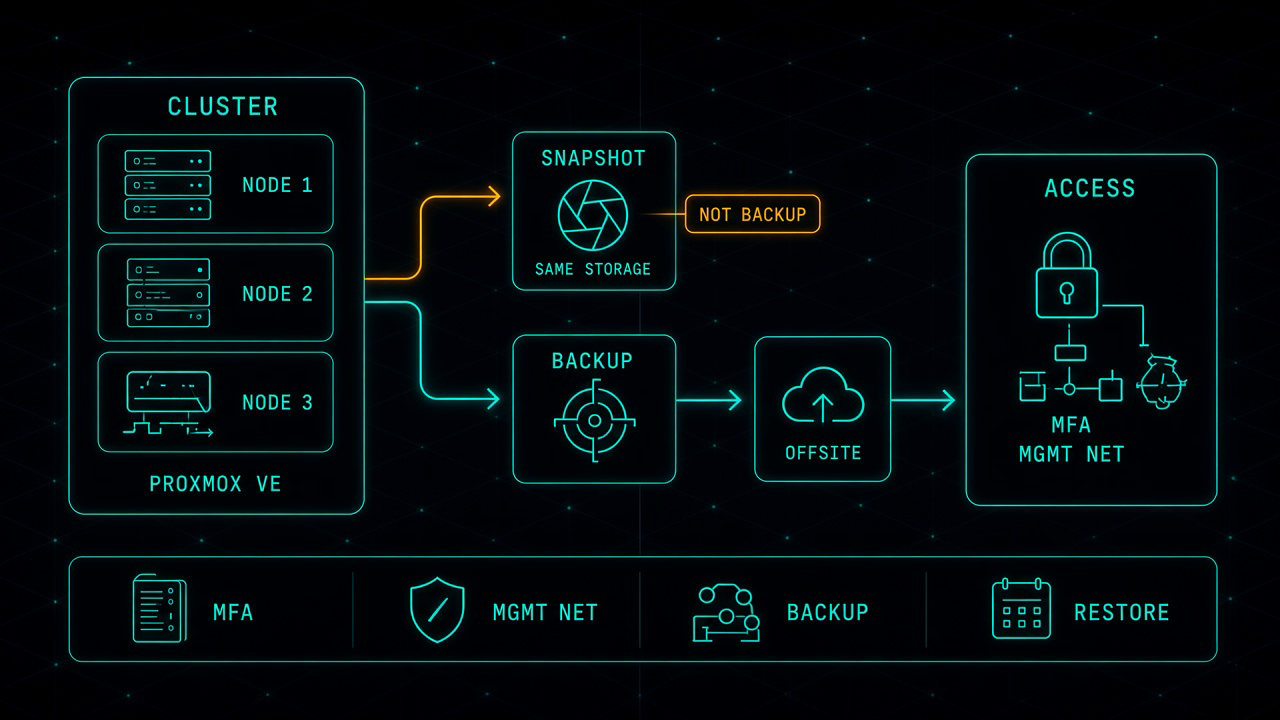
Leaving VMware for Proxmox can be the right financial decision. It is not the finish line. After the last virtual machine lands, you own the hypervisor, the cluster, the backup, and the access path. That is where most of the real work starts.
Read article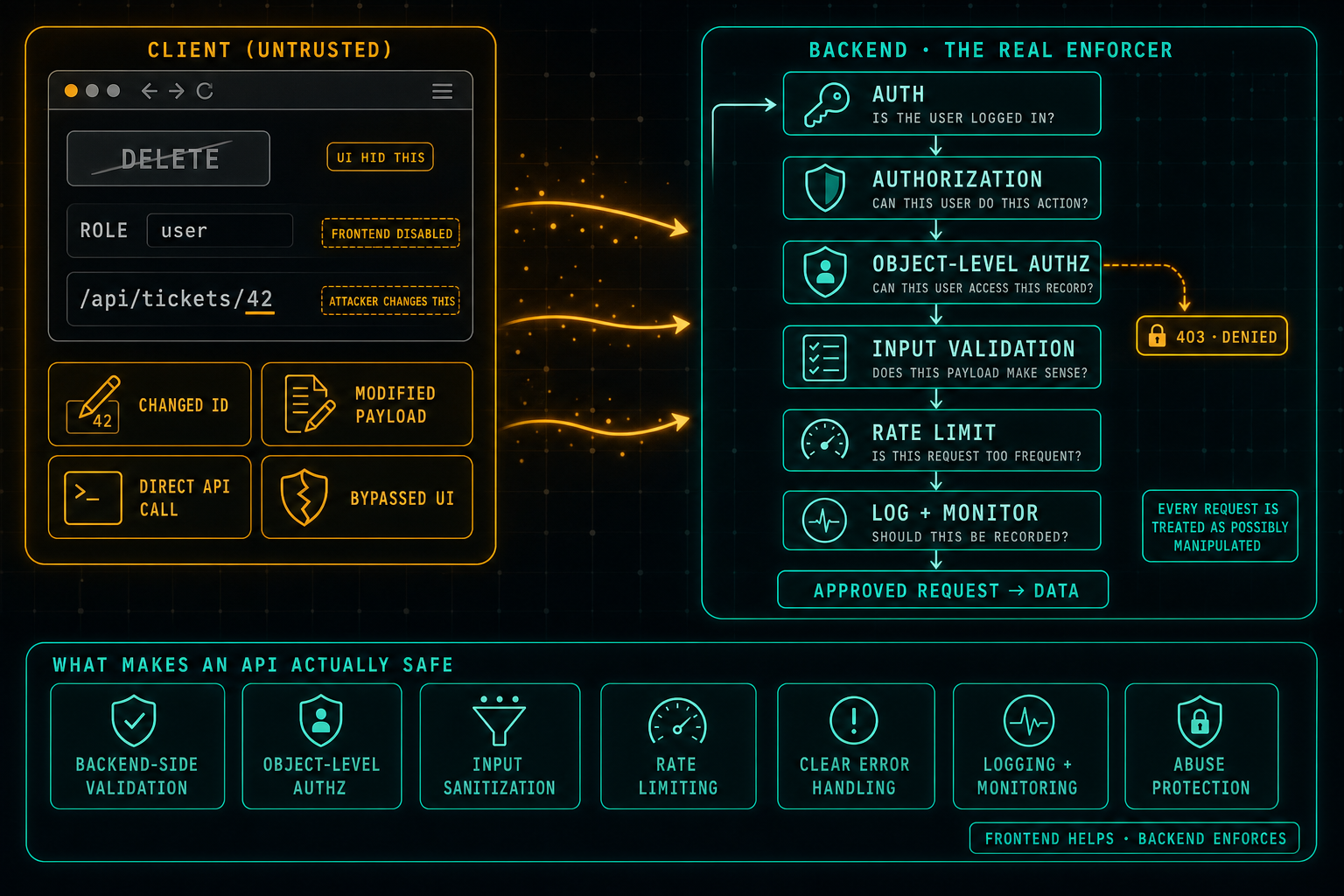
API Security: Do Not Trust the Client
The frontend can hide buttons, disable fields, and guide the user through the right flow, but anything that comes from the client can be changed. Attackers swap IDs in URLs, edit payloads, call the API directly, and bypass the UI completely. Real security lives in the backend: authentication, authorization, object-level access checks, input validation, rate limits, and logging on every request, because every request is treated as possibly manipulated.
Read article