
Certificate Expiration Is Still Taking Systems Down
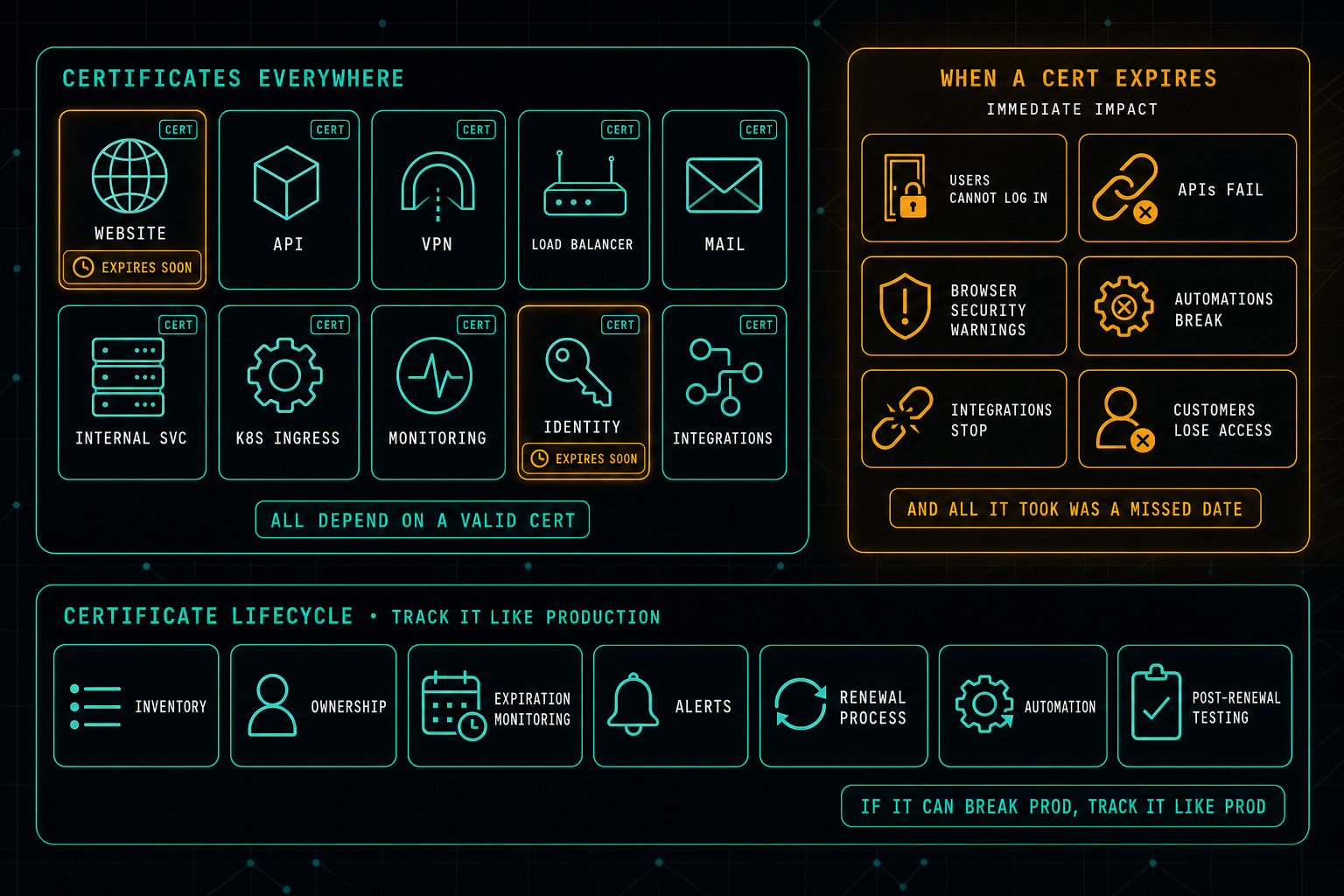
An expired certificate is one of the simplest, most preventable outages, and it still keeps happening. The fix is not heroics on renewal day. It is treating certificates like production assets: a real inventory, a clear owner, monitored expirations, alerts, a renewal process, automation where possible, and post-renewal testing so the change does not break something downstream.
Certificate expiration is still one of the most common reasons for unexpected outages.
It is a problem that has existed for many years, and yet companies of every size still experience it. A certificate quietly reaches its expiration date, and suddenly websites, APIs, internal services, VPNs, or login systems stop working.
The frustrating part is that this is one of the most preventable problems in IT.
When a certificate expires:
- Users cannot log in.
- APIs fail.
- Browsers show security warnings.
- Automations break.
- Integrations stop working.
- Customers lose access.
And in most cases, no one noticed it was about to happen.
Certificate management is not just a security responsibility. It is also an operational responsibility. A missed renewal can cause real downtime, real revenue loss, and a serious impact on user trust.
A healthy certificate management process should include:
- A full inventory of all certificates.
- Clear ownership for each one.
- Expiration monitoring.
- Automatic alerts before expiration.
- A clear renewal process.
- Automation when possible.
- Post-renewal testing.
Modern environments are complex. Certificates live everywhere, on websites, internal services, load balancers, APIs, integrations, and identity systems. If any of them is forgotten, the outage will eventually happen.
The solution is simple but requires discipline.
Treat certificates like any other critical asset. Track them. Monitor them. Renew them on time.
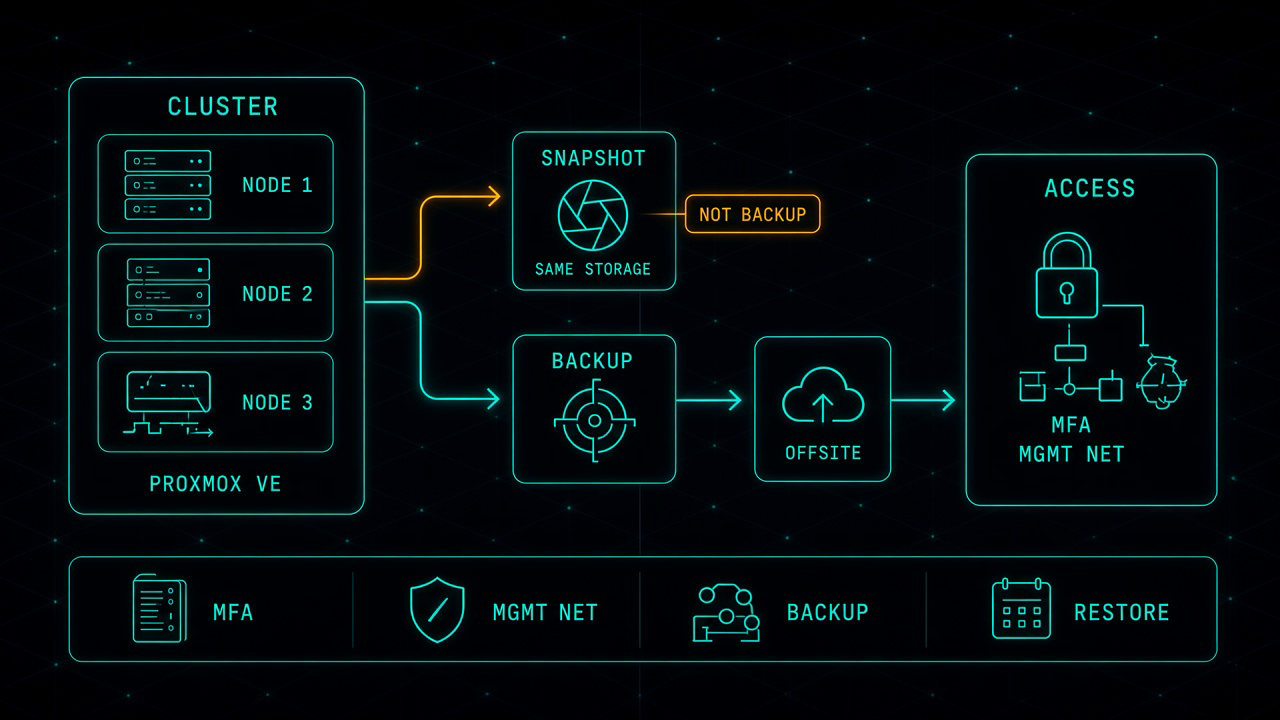
Proxmox in Production: The Work That Starts After the Move
Leaving VMware for Proxmox can be the right financial decision. It is not the finish line. After the last virtual machine lands, you own the hypervisor, the cluster, the backup, and the access path. That is where most of the real work starts.
Read article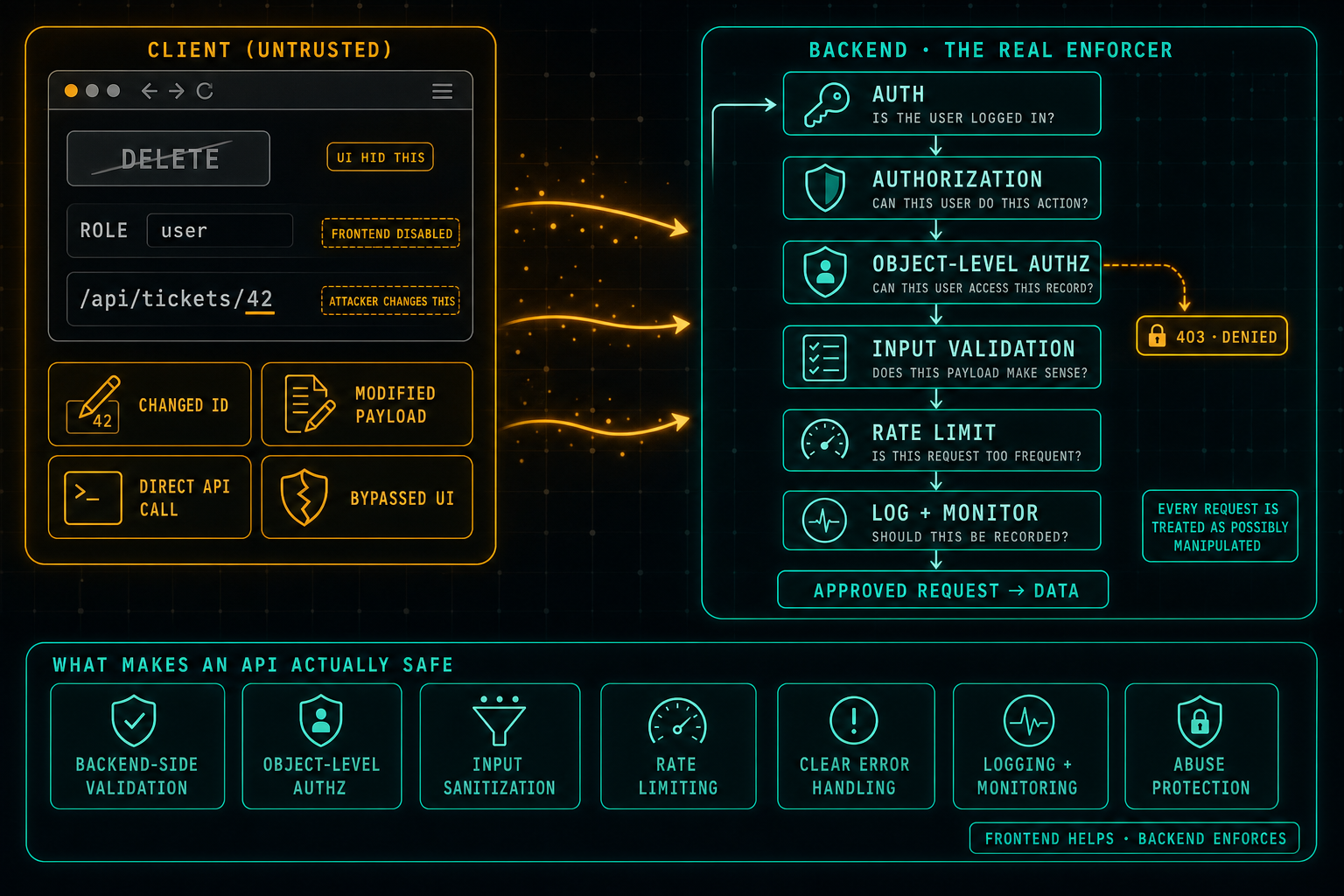
API Security: Do Not Trust the Client
The frontend can hide buttons, disable fields, and guide the user through the right flow, but anything that comes from the client can be changed. Attackers swap IDs in URLs, edit payloads, call the API directly, and bypass the UI completely. Real security lives in the backend: authentication, authorization, object-level access checks, input validation, rate limits, and logging on every request, because every request is treated as possibly manipulated.
Read article