
The Forgotten Server Is the Real Risk
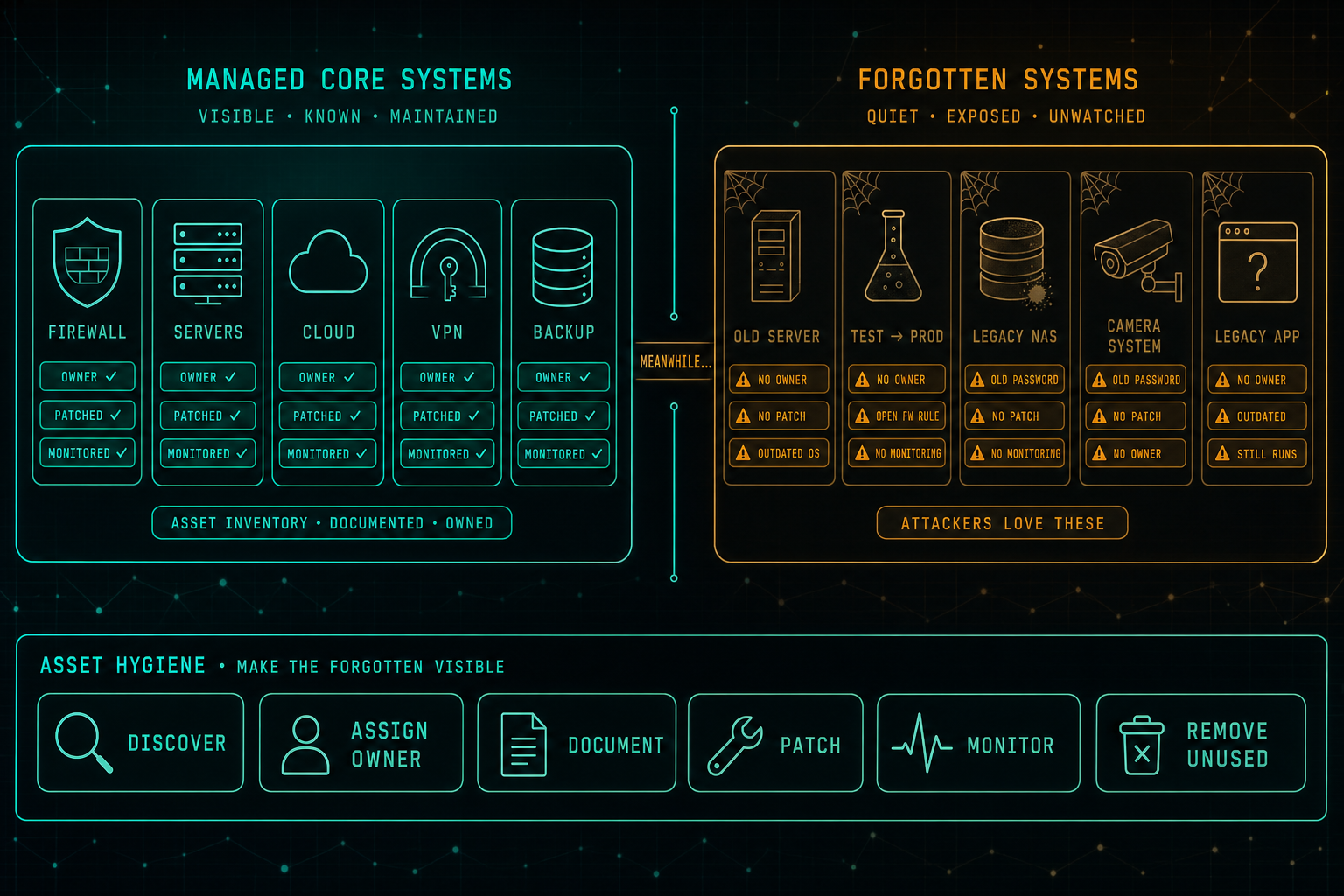
Every company has the systems everyone talks about, the firewall, the main servers, the cloud, the VPN, the backup platform. The real risk usually lives somewhere else: the old server nobody wants to touch, the test machine that became production, the legacy NAS, the camera system with an ancient password, the application that still works but has no owner. The problem is rarely technology. It is ownership.
Every company has systems that everyone knows about.
- The firewall.
- The main servers.
- The cloud environment.
- The VPN.
- The backup platform.
But the real risk is often somewhere else.
- The old server nobody wants to touch.
- The test machine that became production.
- The NAS that was installed years ago.
- The camera system with an old password.
- The application that still works, but nobody owns anymore.
These systems are dangerous because they are forgotten.
- They may not be patched.
- They may not be monitored.
- They may still have open firewall rules.
- They may use old accounts, weak passwords, or outdated software.
Attackers love systems like this because they are quiet, exposed, and usually not watched closely.
The problem is not always technology.
The problem is ownership.
Good security starts with knowing what you have.
- Find the forgotten systems.
- Document them.
- Patch them.
- Monitor them.
- Remove what is no longer needed.
The biggest risk is not always the system you see every day.
Sometimes, it is the one everyone forgot.
Proxmox in Production: The Work That Starts After the Move
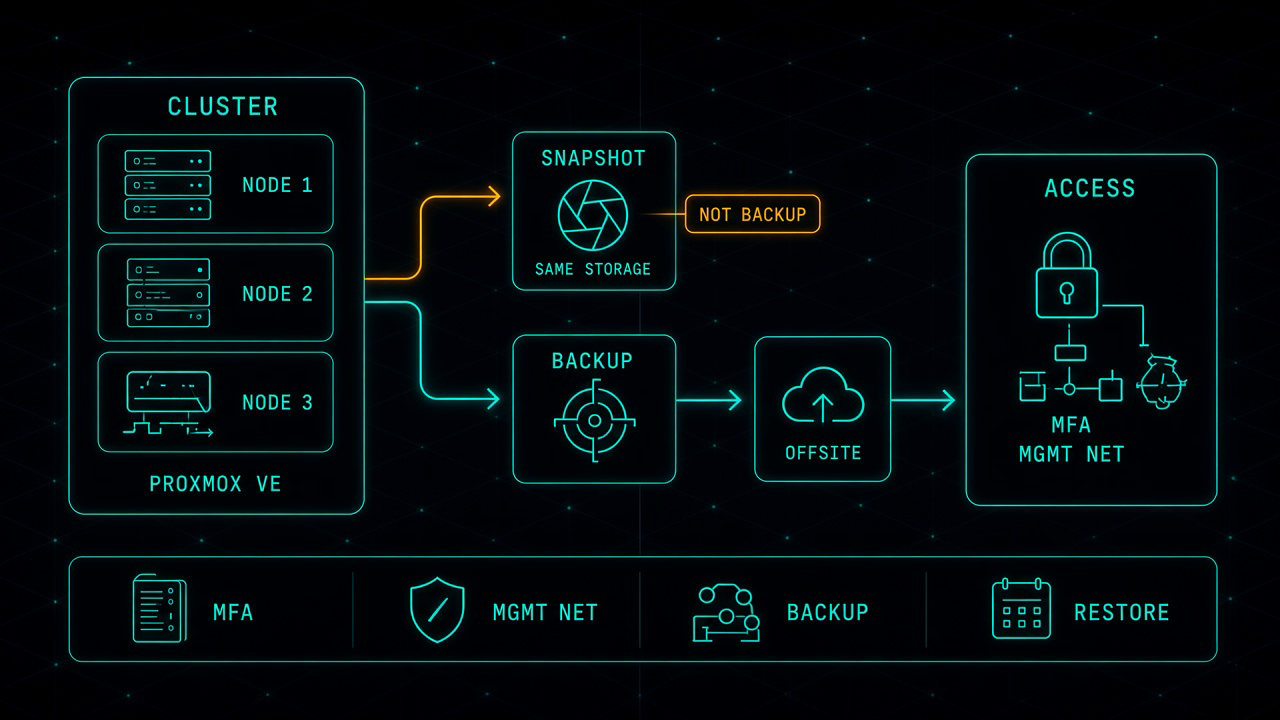
Leaving VMware for Proxmox can be the right financial decision. It is not the finish line. After the last virtual machine lands, you own the hypervisor, the cluster, the backup, and the access path. That is where most of the real work starts.
Read article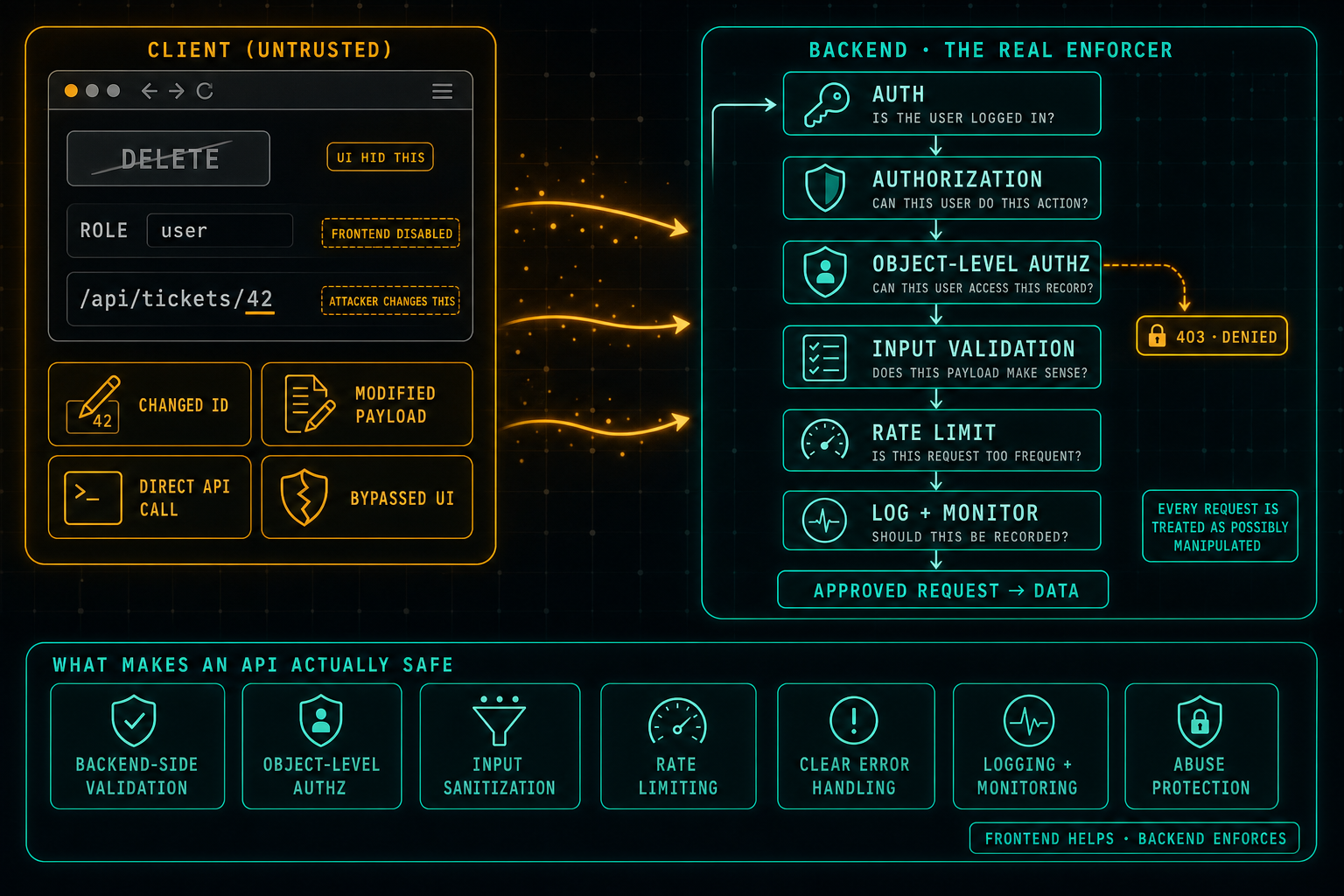
API Security: Do Not Trust the Client
The frontend can hide buttons, disable fields, and guide the user through the right flow, but anything that comes from the client can be changed. Attackers swap IDs in URLs, edit payloads, call the API directly, and bypass the UI completely. Real security lives in the backend: authentication, authorization, object-level access checks, input validation, rate limits, and logging on every request, because every request is treated as possibly manipulated.
Read article