
Firewall Rules: Clean Rules Are Safer Rules
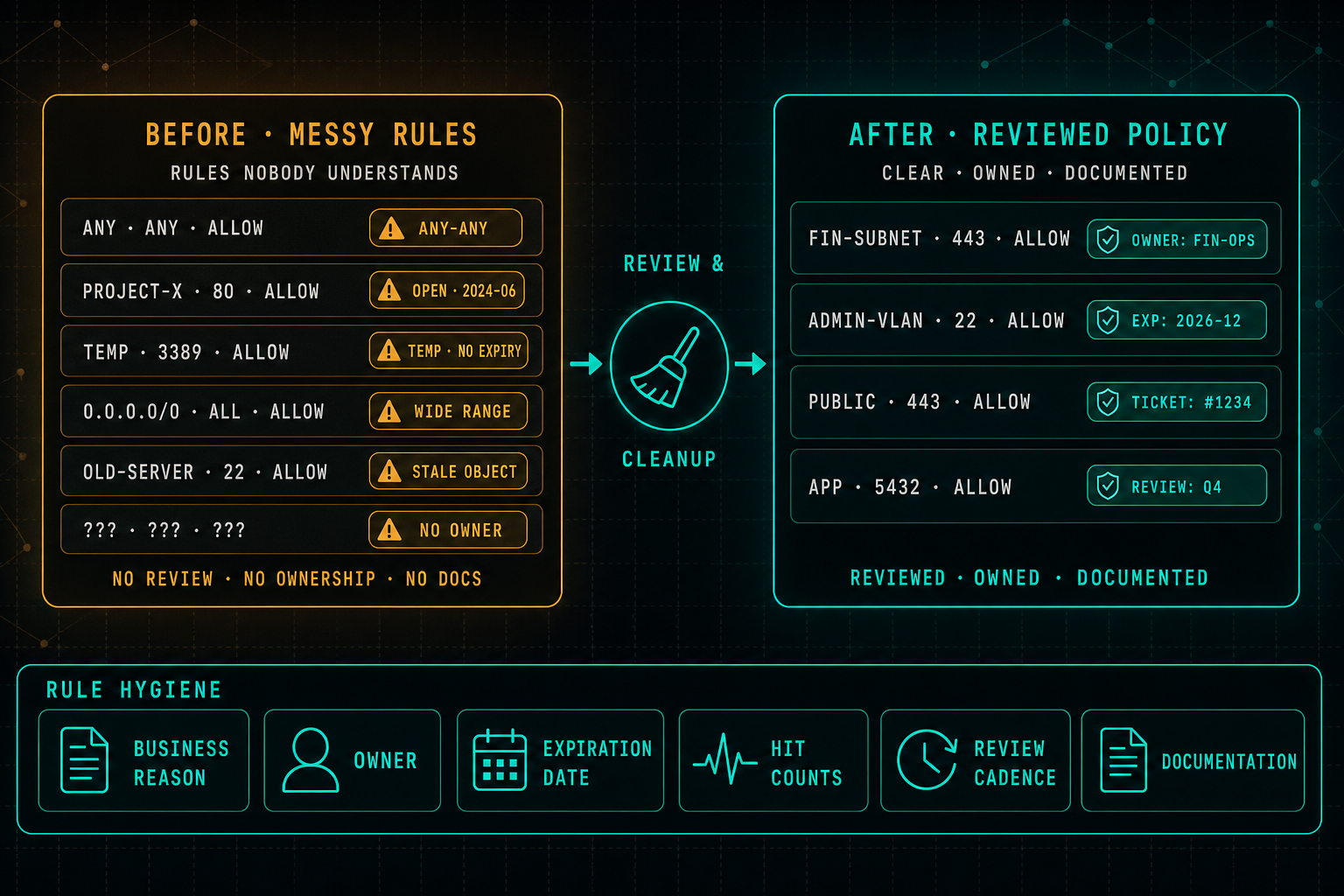
Firewall rules are easy to create and much harder to maintain. Over time the rule base fills up with old projects, temporary access that never expired, wide ranges, stale objects, and rules nobody fully understands anymore. Clean rules, with owners, business justification, expiration dates, hit counts, and a review cadence, are not just tidier. They are measurably safer.
Firewall rules are easy to create, but much harder to maintain.
Over time, many organizations collect old rules, temporary access, unused objects, wide source ranges, open services, and rules that nobody fully understands anymore.
At first, it feels harmless.
But every unclear firewall rule adds risk.
- A rule that was created for a project six months ago may still be open.
- A temporary rule may quietly become permanent.
- An Any-Any rule may stay because nobody wants to break production.
- An old server object may still allow traffic after the system was removed.
This is how firewalls become messy.
A clean firewall policy should be simple to understand. Each rule should have a clear business reason, an owner, a source, a destination, a service, and a review date.
- Temporary rules should have an expiration date.
- Unused rules should be removed.
- Wide rules should be reduced.
- Objects should be named clearly.
- Hit counts should be checked regularly.
- Changes should be documented.
The goal is not to have fewer rules at any cost.
The goal is to have rules that make sense.
Clean firewall rules improve security, reduce mistakes, make troubleshooting easier, and help IT teams understand what is really allowed in the network.
Proxmox in Production: The Work That Starts After the Move
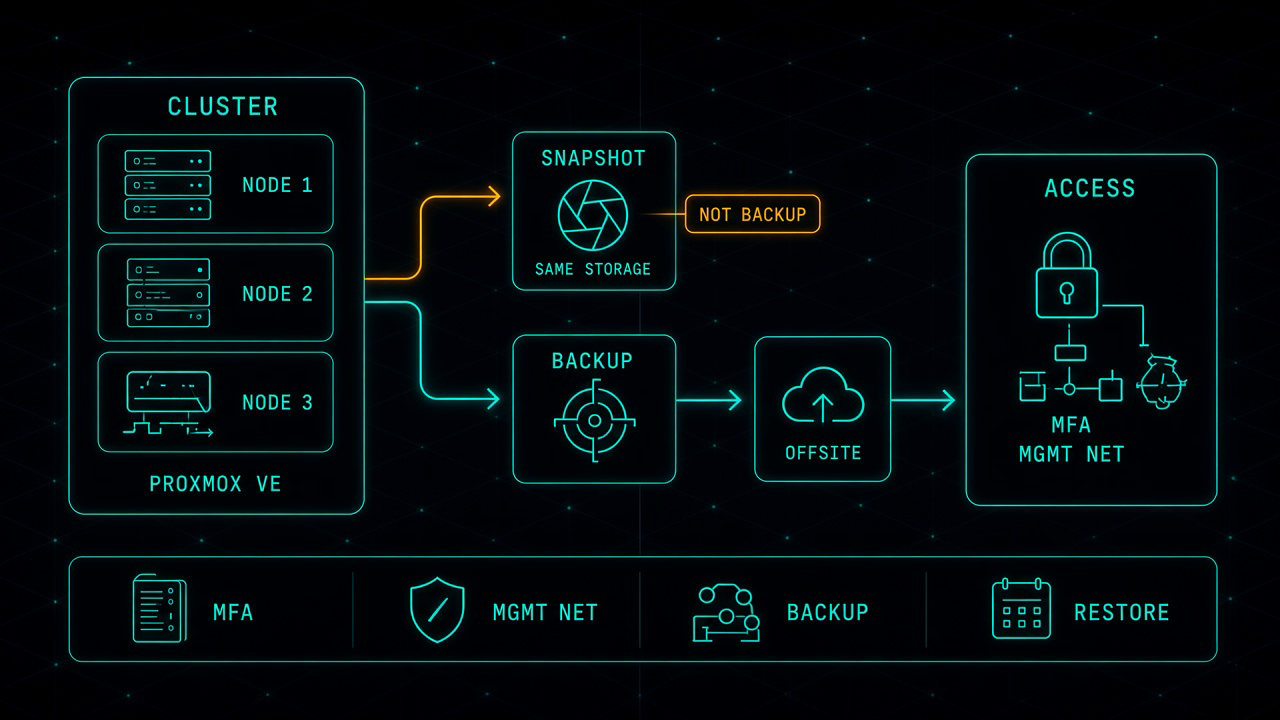
Leaving VMware for Proxmox can be the right financial decision. It is not the finish line. After the last virtual machine lands, you own the hypervisor, the cluster, the backup, and the access path. That is where most of the real work starts.
Read article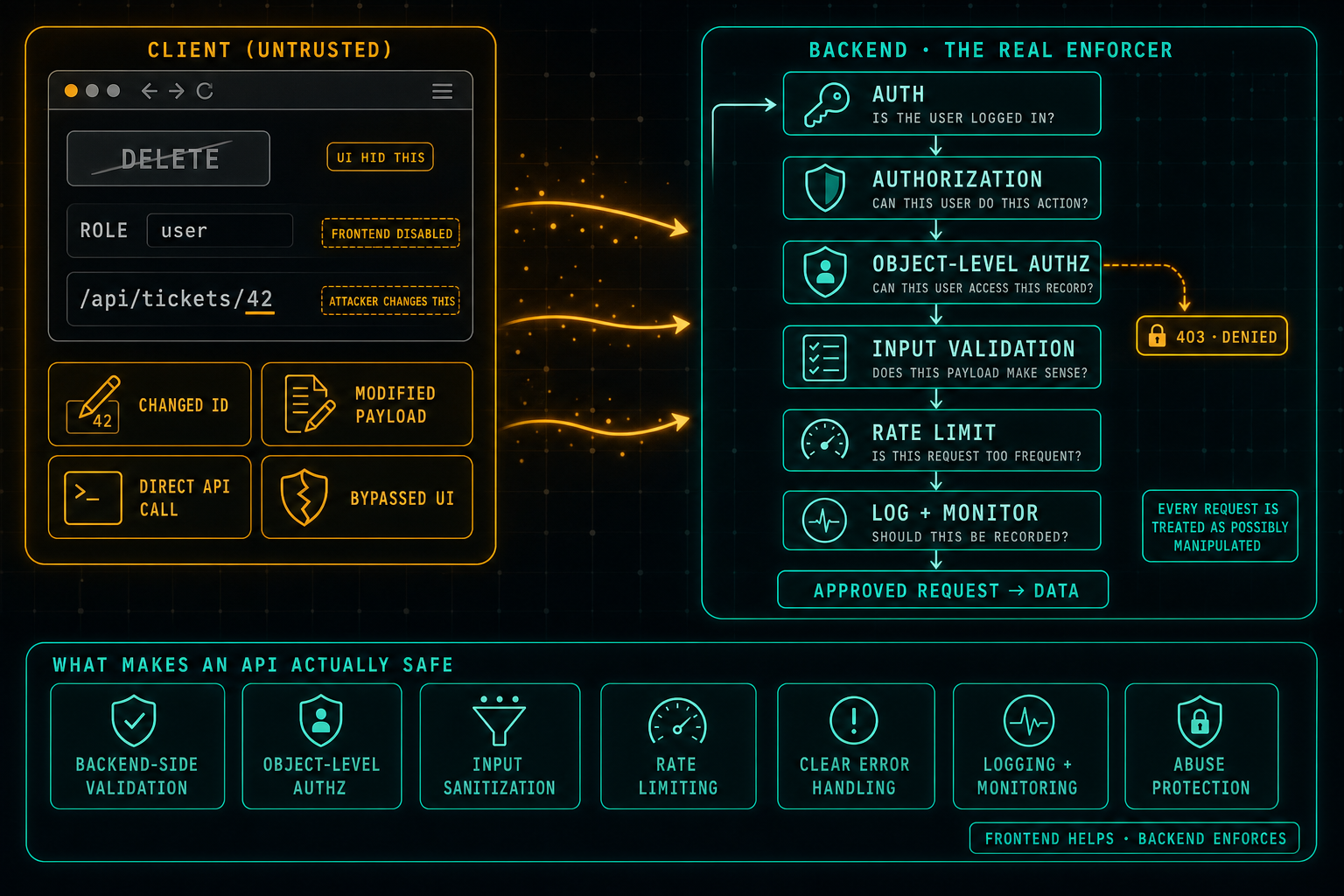
API Security: Do Not Trust the Client
The frontend can hide buttons, disable fields, and guide the user through the right flow, but anything that comes from the client can be changed. Attackers swap IDs in URLs, edit payloads, call the API directly, and bypass the UI completely. Real security lives in the backend: authentication, authorization, object-level access checks, input validation, rate limits, and logging on every request, because every request is treated as possibly manipulated.
Read article