
Your Firewall Should Not Be Your Only Security Strategy
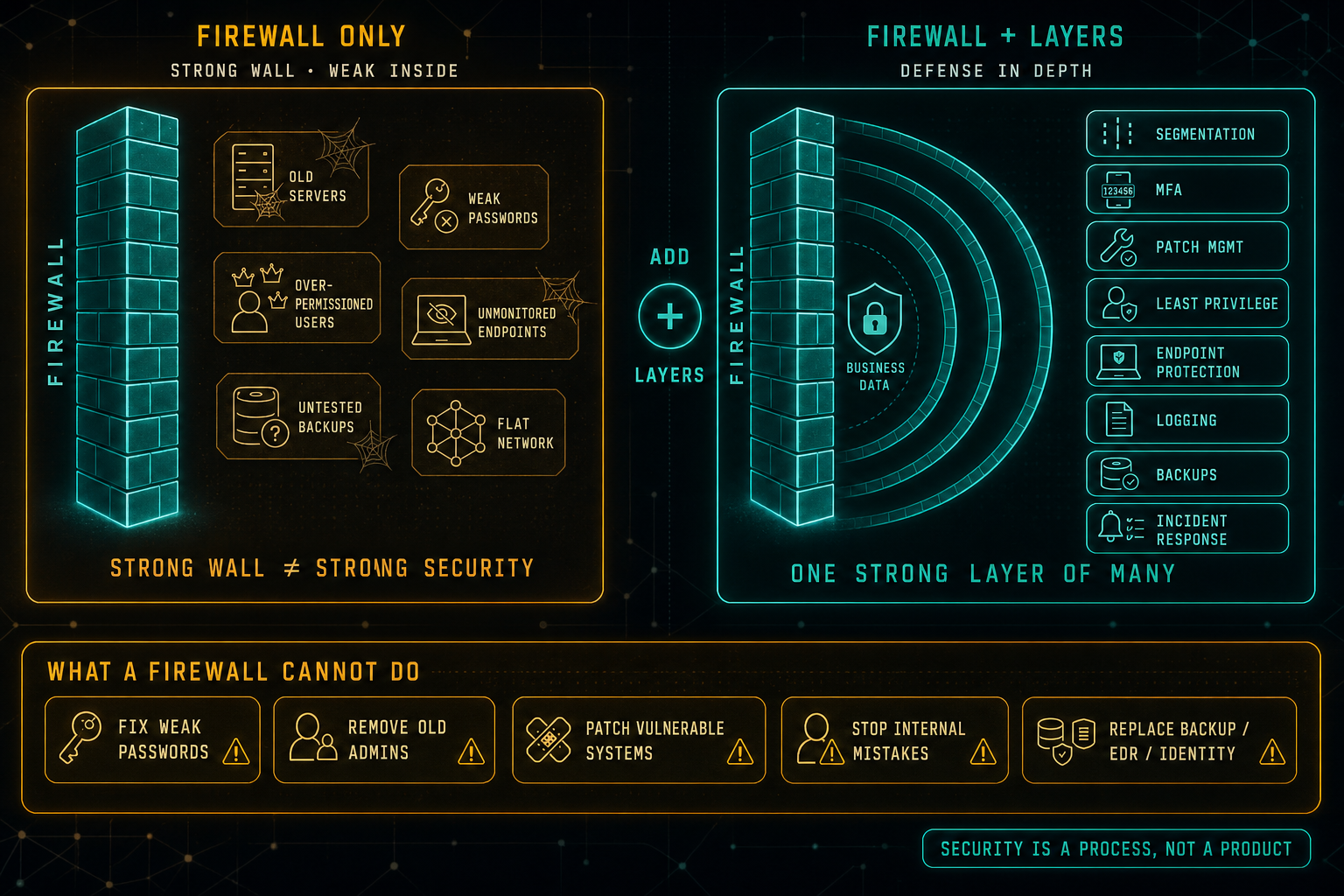
A strong firewall matters, but a strong firewall protecting a weak interior is still a weak environment. Old servers, weak passwords, over-permissioned users, unmonitored endpoints, untested backups, and flat networks do not stop being problems just because the perimeter is solid. Real security comes from layers, segmentation, MFA, patching, least privilege, endpoint protection, logging, backups, and incident response, all running together.
A good firewall is important.
It controls traffic, blocks unwanted access, separates networks, and gives IT teams visibility into what is moving in and out of the environment.
But a firewall is not a full security strategy.
Many organizations invest a lot in the firewall and still leave serious gaps behind it:
- Old servers are not patched.
- Users have too many permissions.
- Endpoints are not monitored.
- Backups are not tested.
- Logs are collected but nobody reviews them.
- Internal networks are too flat.
In that situation, the firewall may be strong, but the environment is still weak.
- A firewall cannot fix weak passwords.
- It cannot remove old admin accounts.
- It cannot patch vulnerable systems.
- It cannot stop every mistake inside the network.
- It cannot replace backup, monitoring, identity security, or endpoint protection.
Security needs layers.
- Network segmentation.
- MFA and identity security.
- Patch management.
- Least privilege.
- Endpoint protection.
- Logging and monitoring.
- Backups that are tested.
- An incident response plan.
Each layer reduces risk in a different way.
The firewall is one important layer.
But it should not be the only one.
A strong firewall can help protect the business, but only when the rest of the environment is also managed, monitored, and maintained.
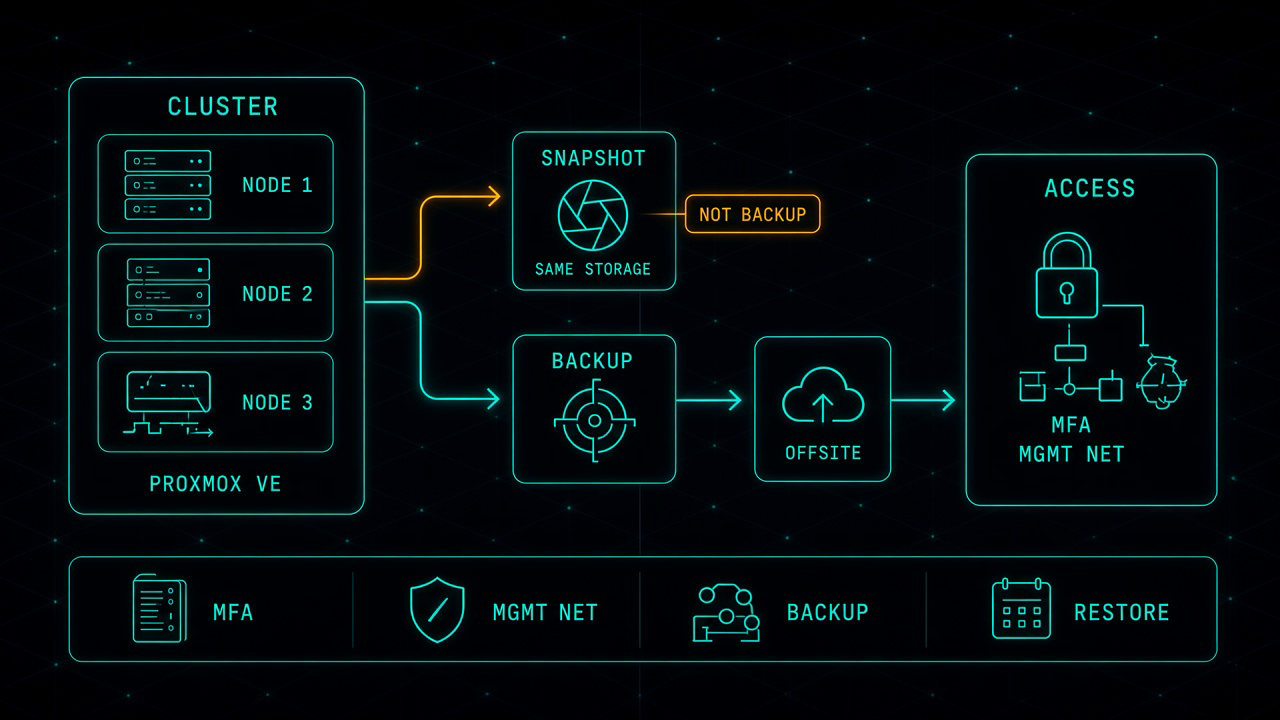
Proxmox in Production: The Work That Starts After the Move
Leaving VMware for Proxmox can be the right financial decision. It is not the finish line. After the last virtual machine lands, you own the hypervisor, the cluster, the backup, and the access path. That is where most of the real work starts.
Read article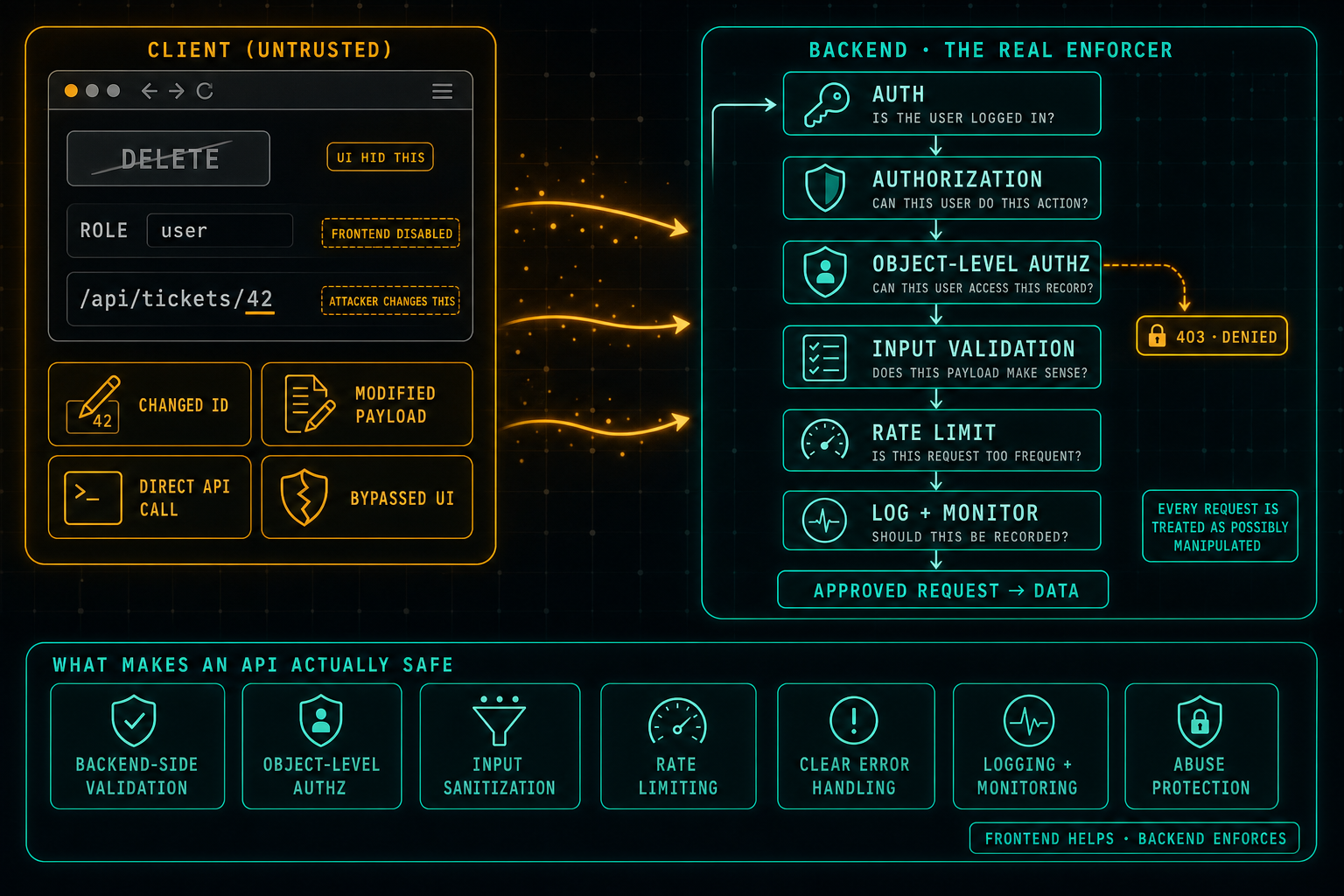
API Security: Do Not Trust the Client
The frontend can hide buttons, disable fields, and guide the user through the right flow, but anything that comes from the client can be changed. Attackers swap IDs in URLs, edit payloads, call the API directly, and bypass the UI completely. Real security lives in the backend: authentication, authorization, object-level access checks, input validation, rate limits, and logging on every request, because every request is treated as possibly manipulated.
Read article