
Break Glass Accounts: Necessary, but Dangerous
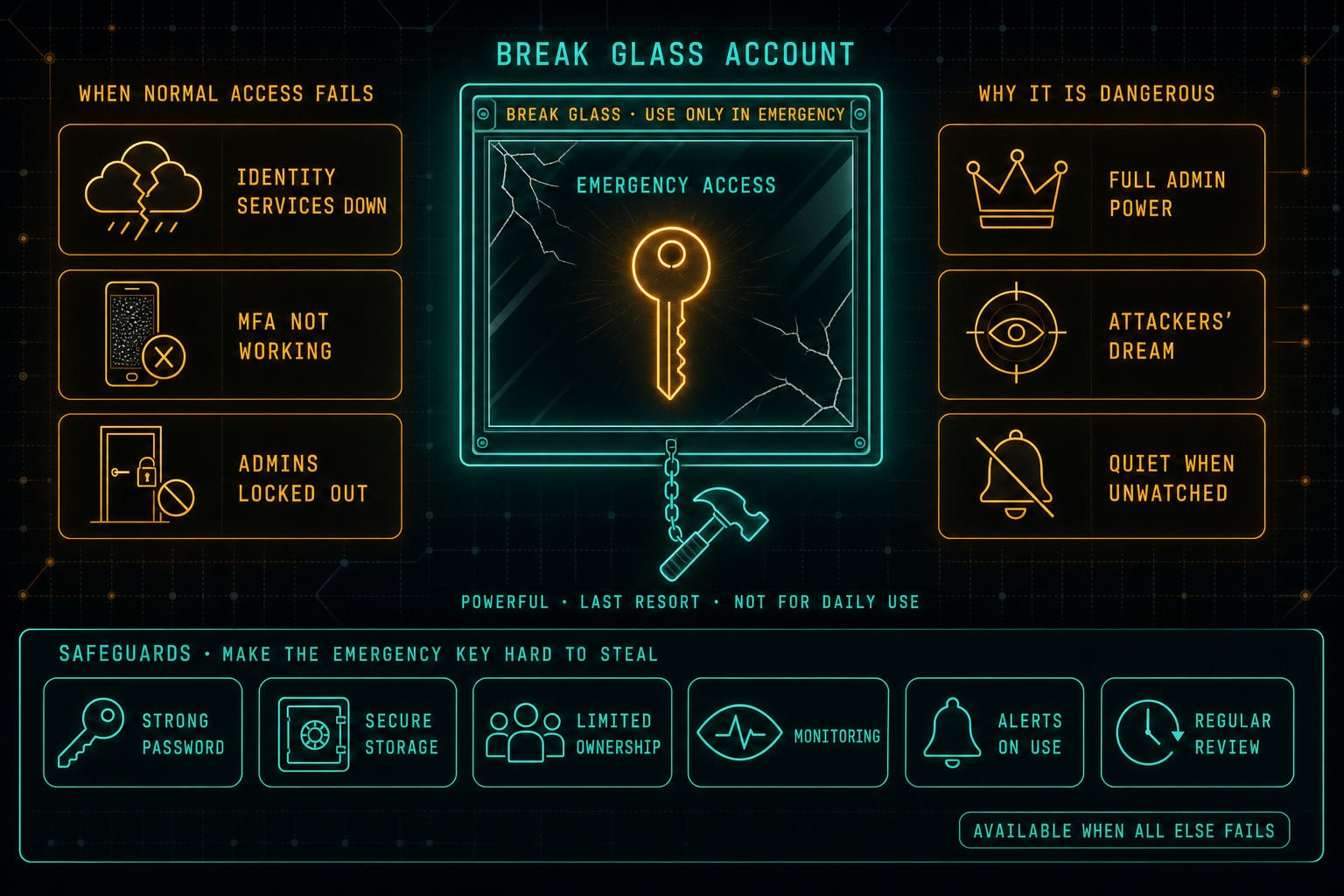
Every organization needs a backup plan for access. When identity services are down, MFA is broken, or the regular admins are locked out, break glass accounts are how the company gets back in. The same accounts are also a dream target for attackers, which is why they need strong credentials, safe storage, limited ownership, monitoring, alerts on use, and a real review cadence, not a sticky note in a drawer.
Every organization needs a backup plan for access.
- What happens if identity services are down?
- What happens if MFA is broken?
- What happens if the main admin accounts are locked out during an emergency?
This is why break glass accounts exist.
A break glass account is an emergency account used only when normal access methods are not available. It can help the organization recover control during a serious incident.
But this type of account is also dangerous.
Because it is powerful, attackers would love to find it. If it is not protected correctly, it can become the easiest way into the environment.
- A break glass account should not be used for daily work.
- It should not be shared casually.
- It should not have a weak password.
- It should not be ignored after it is created.
It needs clear rules.
- A strong password and a strict storage process.
- Limited ownership, only a few named people.
- Monitoring on the account itself.
- An immediate alert any time it is used.
- Every use logged and investigated.
- Regular review on a fixed cadence.
Some organizations also keep more than one emergency account, stored and monitored separately, so they are not dependent on a single point of failure.
The goal is simple.
Break glass accounts should be available when everything goes wrong, but protected so well that nobody uses them unless it is truly necessary.
Local Admin Rights Should Not Be Permanent
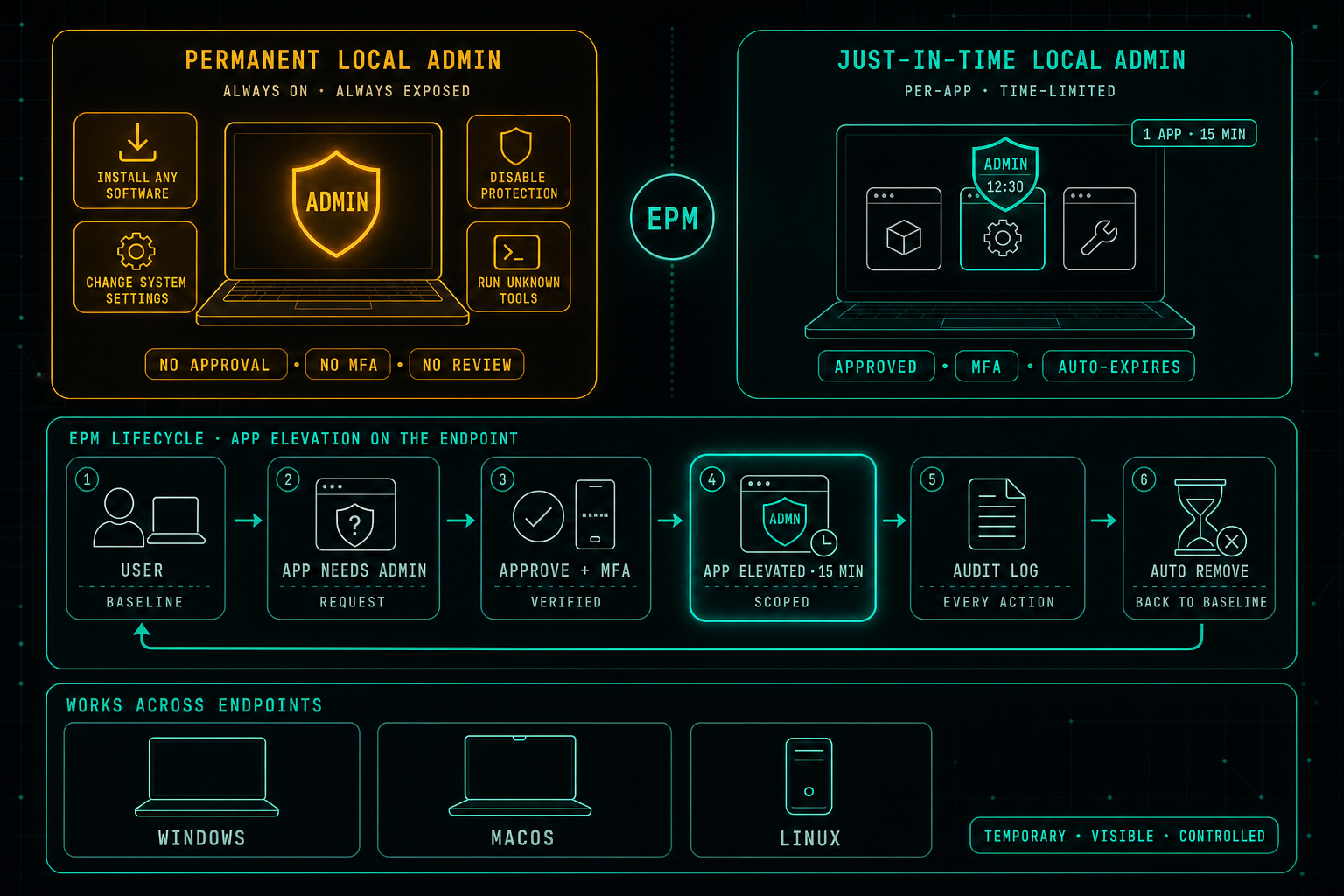
Privileged access is not only a cloud problem. While most security work focuses on admin roles in Microsoft 365, cloud platforms, firewalls, and servers, the local admin rights sitting on every laptop are often quietly forgotten. Endpoint Privilege Management replaces permanent local admin with controlled, per-app, time-limited elevation, so users keep working without the endpoint becoming the soft underbelly of the environment.
Read article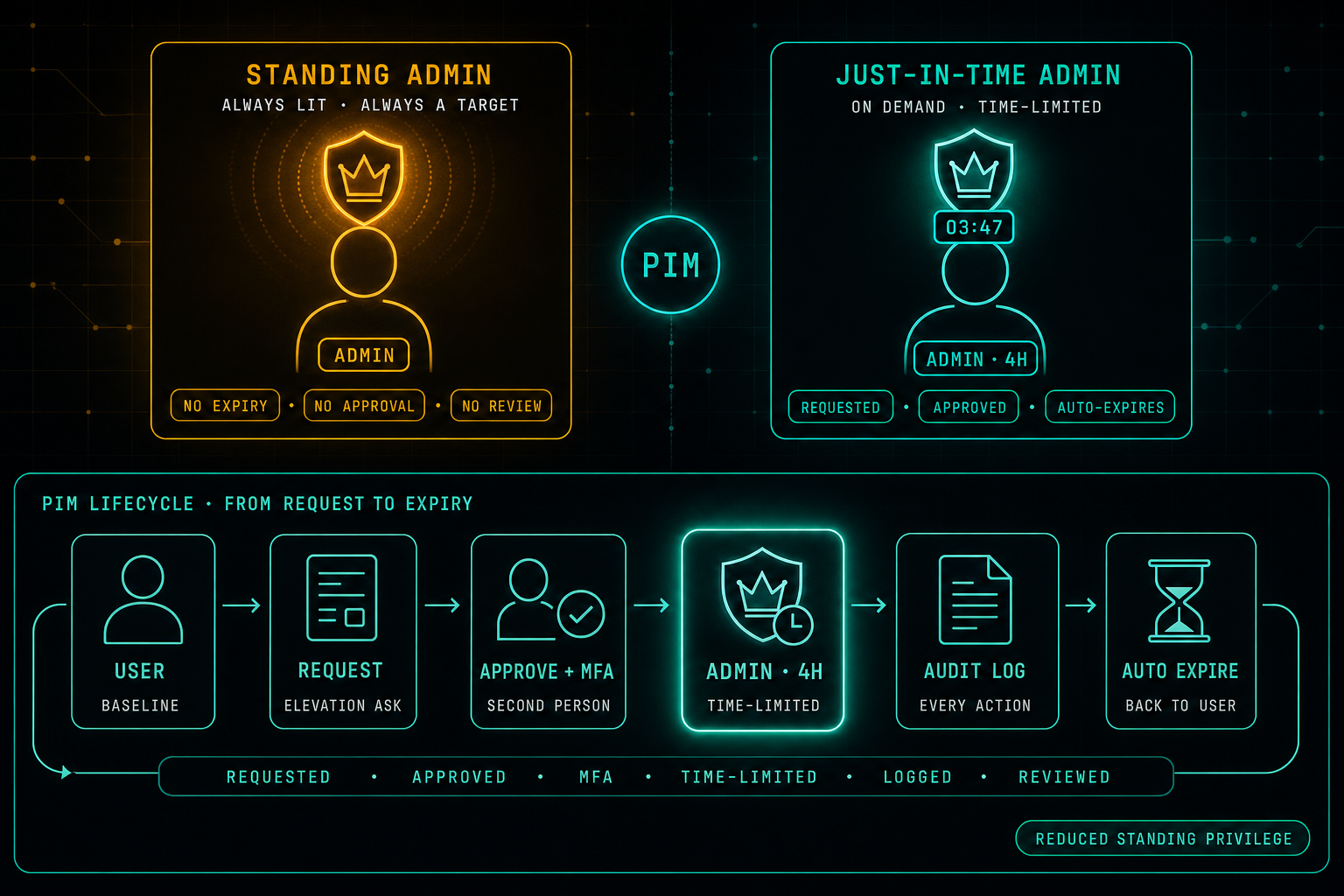
Privileged Identity Management: Admin Access Should Not Be Permanent
Admin access is one of the most sensitive things in any organization, yet many companies still treat it as something permanent. Permissions are granted and quietly stay. Privileged Identity Management flips the model, admin rights are requested when needed, approved, MFA-enforced, time-limited, logged, and reviewed. The goal is not to make work harder. It is to make admin access controlled, visible, and temporary.
Read article